
Muscle Gain
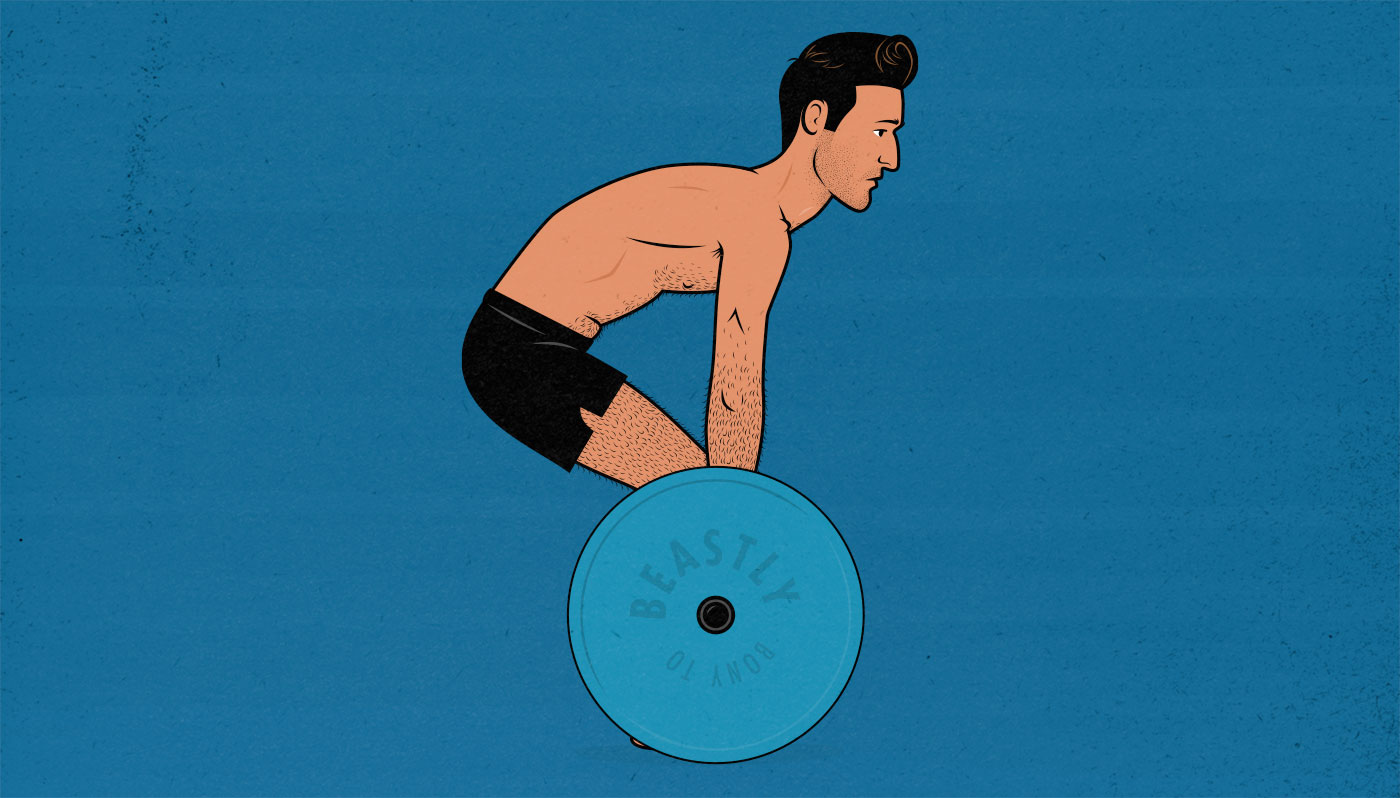
Should Beginners Lift to Muscle Failure?
As a new lifter trying to gain muscle size, how close to failure should you be lifting? Some argue that beginners should stop shy of failure, leaving a few reps in reserve (RIR). There’s some wisdom to that advice. It allows beginners to better practice their technique, reducing the risk of injury.
Others argue that beginners should take their sets all the way to muscular failure, ensuring they’re pushing themselves hard enough to stimulate a maximal amount of muscle growth with every set. But does taking a set all the way to failure actually stimulate more muscle growth? Let’s take a look at the research.
Finally, not every lift is the same. Some suit training to failure better than others. So, it’s not as simple as saying that a beginner should always train to failure or avoid training to failure. It often depends on the specific lift.
Read More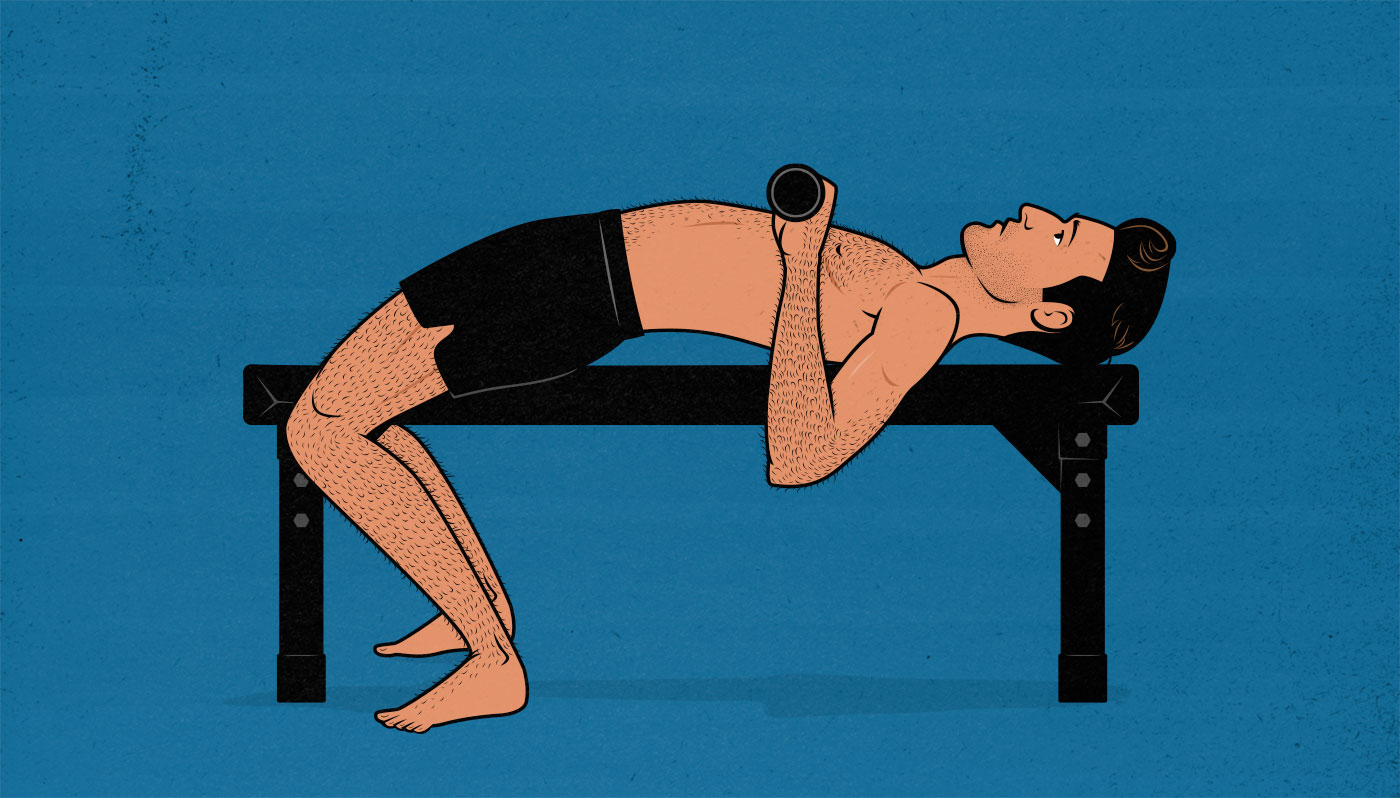
Ectomorph Workout Plan: Beginner Weight Training Routine
Skinny guys are often called “ectomorphs.” It’s a slang term referring to our thinner bones, narrower frames, shallower ribcages, or lankier limbs. Does being naturally thinner affect how we should exercise, lift weights, and build muscle?
Many of us ectomorphs also have atypical goals. Most people want to lose weight, we want to gain it. Most people intuitively eat too much food, we eat too little. We’re usually eager to bulk up, and we often have a hard time of it. Some may even worry they’ve got bad muscle-building genetics. Does that change how we should train?
Different workout programs are designed for people with different goals. Some, like CrossFit, are designed to improve our general fitness. Others, like Starting Strength and StrongLifts 5×5, are designed to improve our general strength. Still others, such as bodybuilding, seem entirely centred around helping naturally muscular guys gain even more muscle. What’s the best way to work out if we’re trying to gain muscle size?
So, how should ectomorphs work out?
Dive In
A Review of Interesting Muscle-Building Research for Skinny Guys
In this article, let’s take a closer look at some of the most interesting research that could help us ectomorphs, hardgainers, and skinny guys bulk up, including studies looking into:
- How important are bicep curls for building bigger arms?
- Does muscle memory really exist?
- How long should we rest between sets?
- Does doing more sets increase muscle growth?
- What happens if we bulk on a ketogenic diet?
- Are high-protein diets healthy?
- Does having casein for bed help with muscle growth?
- Are 5×5 workouts good for building muscle?
- Are 10×10 German Volume Training workouts good for building muscle?
- Are push/pull/legs splits good for building muscle?
- Which lifestyle intervention caused simultaneous muscle growth and fat loss?
All of those answers and more inside.
Read More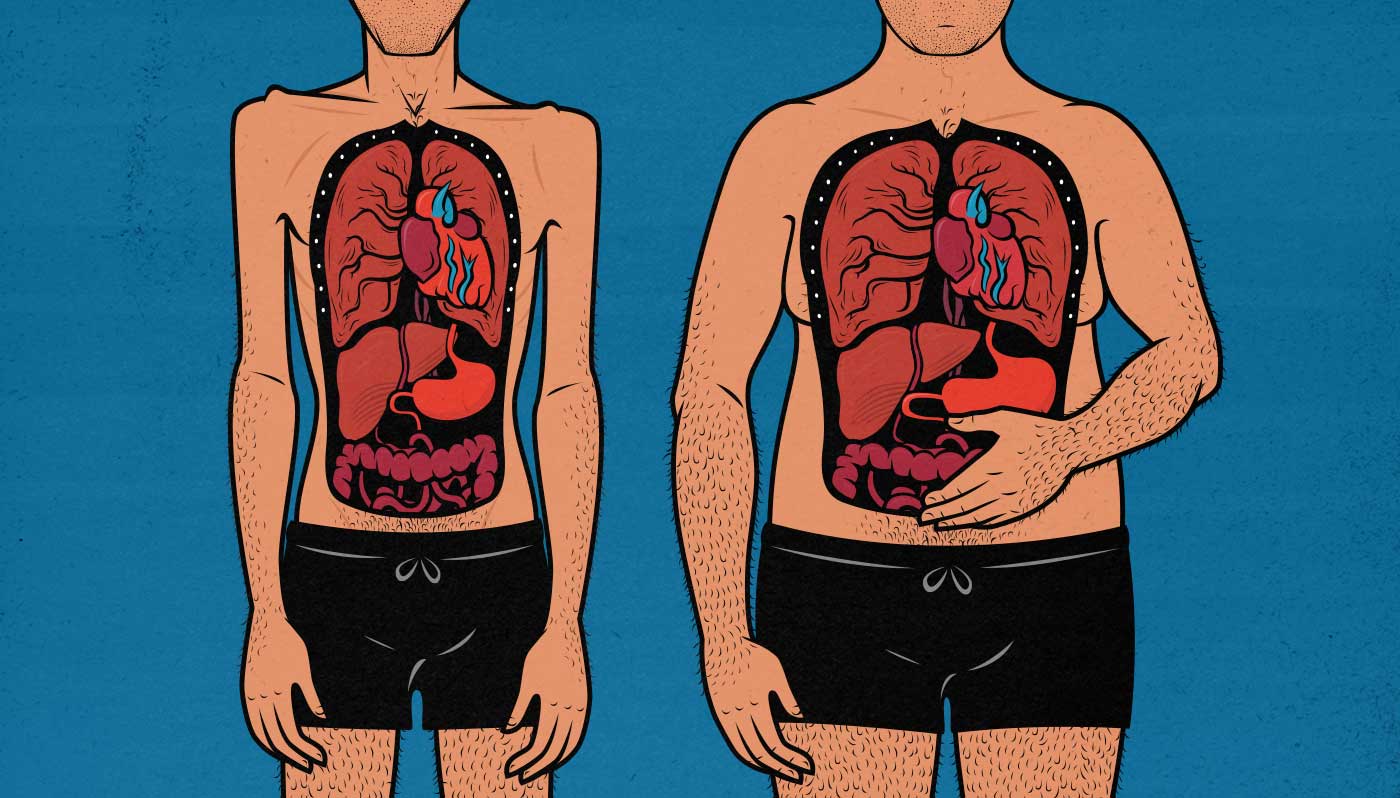
Hardgainers: Why Is It So Hard for Skinny Guys to Gain Weight?
It’s common for skinny “hardgainers” to have trouble gaining weight. We’re in the midst of an obesity epidemic, surrounded by people who gain weight by accident, and yet no matter what we do, we can’t budge the scale.
“Just eat more.” I know. I’ve heard it, too. That advice isn’t wrong, but it’s hard to eat more when we’re fighting against faster metabolisms, smaller stomachs, and humbler appetites. Sometimes when we eat more food, our metabolisms get faster, gobbling up the extra calories, preventing us from gaining weight. We’ll explain all of that.
There are proven methods that can help us gain weight. We’ve helped tens of thousands of skinny guys bulk up. We’ve done it ourselves. We’ll teach you how to do it, too.
There are advantages to being a hardgainer. Once you learn how to take advantage of your body type, you may be able to build muscle faster and more leanly than the average person.
Read More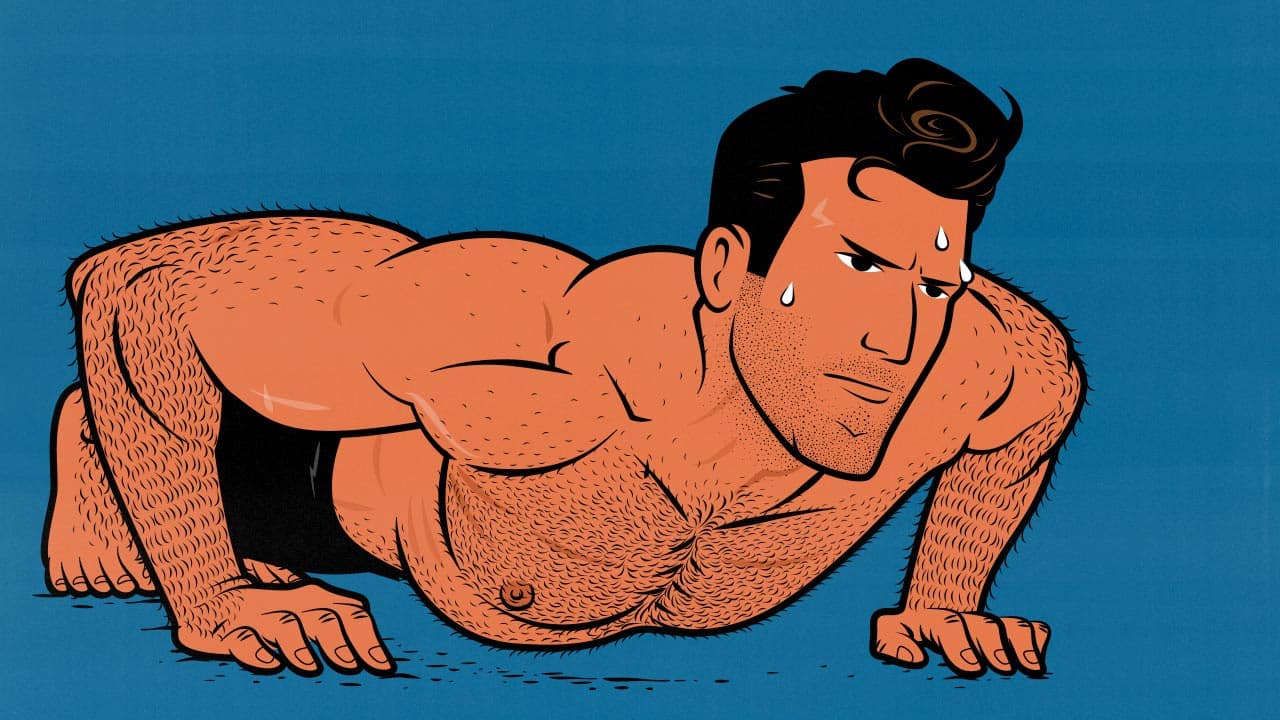
Beginner Bodyweight Workout Plan for Building Muscle—Full Guide
Bodyweight workout plans can be incredibly good for building muscle, especially in your upper body. If you put enough mechanical tension on your muscles, they’ll grow. That’s just as true with bodyweight exercises as it is with free weights or exercise machines.
However, most bodyweight workout plans are designed to help people get fitter, not more muscular. If you’re trying to build muscle, that won’t cut it. To maximize your rate of muscle growth, you need to train for muscle growth. You need to do bodyweight hypertrophy training.
In this article, we’ll teach you the best bodyweight exercises for building muscle, then give you a full hypertrophy training workout routine you can do at home.
Read More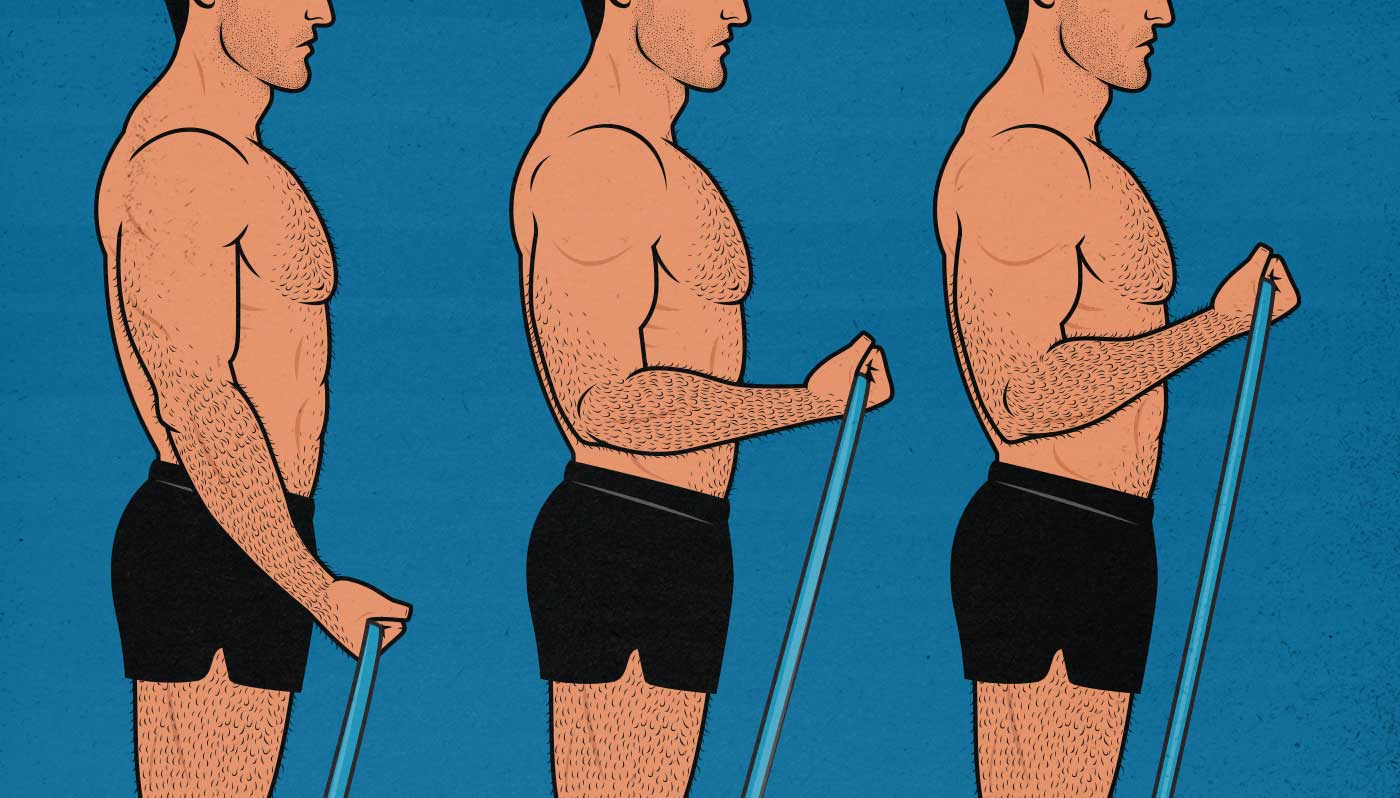
Do Resistance Bands Build Muscle? Yes, But How Well?
Resistance bands are cheap, portable, and convenient. They challenge our muscles. What more do we need? There’s a whole grain of truth there. Resistance bands can stimulate muscle growth. Plenty of people get great results from training with them. You don’t need anything more.
But what if you’re trying to build muscle as quickly, efficiently, or painlessly as possible? Are resistance bands the best tool for that? That’s a different question. In that case, we need to compare resistance bands against the alternatives: bodyweight exercises, dumbbells, barbells, and exercise machines.
So, how do resistance bands compare to callisthenics and free weights? Let’s delve into it.
Read More
Bulking Set Point and “Muscle Memory”
You could think of your body as having a built-in bodyweight thermostat. You might have your weight set at, say, 130 pounds. If you go above 135, your appetite automatically turns off until you get back to 130 pounds. If you go below 125 pounds, your appetite automatically turns on until you get back up to 130 pounds. There’s more at play here than just your appetite, but you get the idea: your body is automatically regulating your weight around a given “set point.”
When you’re bulking up, you’re fighting that set point. It’s trying to regulate your body weight back down. It’s trying to eliminate all the progress you’ve made.
So how do we get your set point to 150, 180 or even 200 pounds? Is that even possible? That’s what this article is about.
Read More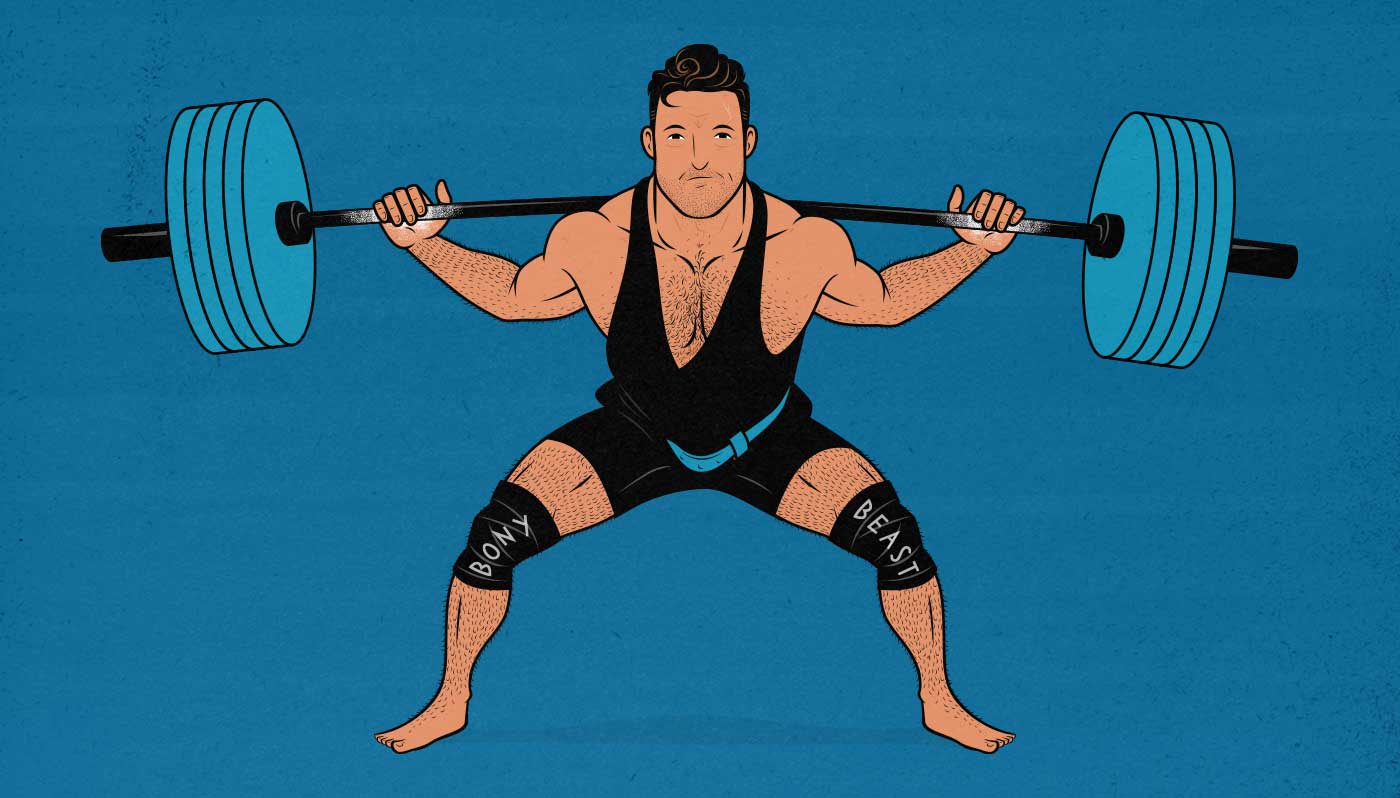
Is Strength Training Good for Building Muscle?
Is strength training good for building muscle? Some of the most popular programs that skinny guys use to bulk up, such as StrongLifts 5×5 and Starting Strength, are designed for gaining strength. But what if we’re trying to become bigger and stronger? Are strength training programs good for building muscle?
If we look at a recent study comparing low-rep training strength training against moderate-rep hypertrophy training, we see that hypertrophy training stimulates more than twice as much muscle growth per set. Does that show that hypertrophy training is better for building muscle?
There’s new research coming out showing that doing metabolic training in higher rep ranges increases muscle growth by increasing the amount of fuel in our muscles—sarcoplasmic hypertrophy. Lower-rep training is thought to stimulate muscle growth via myofibrillar hypertrophy. Does that mean that strength training builds harder, denser muscles?
Are the big three powerlifting lifts—the back squat, the bench press, and the deadlift—the best lifts for building muscle? And how crucial are isolation lifts when bulking up?
Read More
Muscle Size and Strength Standards for Ectomorphs
How much muscle and strength can an “ectomorph” gain? Plenty of research has looked into rates of muscle and strength gain, but what if you’re a naturally skinny guy? Are there different strength standards for us?
Skinny guys do start off with less muscle mass, but what effect does that have on how quickly we can grow? Do we have an extended period of newbie gains, allowing us to gain muscle and strength more quickly? Or does having less muscle mass indicate that our genetics are poor, causing us to build muscle more slowly?
We have thinner bones and narrower frames, and we tend to start off weaker. Does that limit how strong we can become?
In this article, we’ll go over two main questions from an ectomorph’s perspective:
- How much muscle can an ectomorph gain in his first year? Most guys can expect to gain around twenty pounds of muscle during their first year of lifting weights. How does that change for an ectomorph?
- How strong can an ectomorph get after a year of lifting weights? With a good workout routine, most guys are able to bench press 225 pounds (100kg), squat 315 pounds (140kg), and deadlift 405 pounds (180kg). Are these numbers realistic for ectomorphs?
- What’s an ectomorph’s lifetime muscular genetic potential? If we lift for a lifetime, how big can we hope to get?
- How strong can an ectomorph get with a lifetime of serious training? If we develop our muscles to their full potential, how strong can we hope to become?
Let’s dive in.
Read More
DOMS: Is Muscle Soreness A Sign of Muscle Growth?
When I first started lifting weights, I was absolutely crippled by muscle soreness. I would wince when sitting in chairs, struggle to lift my knees high enough to climb stairs, and barely be able to get glasses from the cupboard. I loved it. I was sick and tired of being skinny, and I thought muscle soreness was a sign that my muscles were growing.
A couple of months later, my soreness faded away to almost nothing. I could sit down in a chair without everyone in the room grimacing. I could even hold myself upright in it. I started to feel less like a burning puddle of oil, more like a human being. It was awful.
My gains had started to slow down as well, and I was convinced that my waning muscle growth was connected to my fading muscle soreness. Was my fading muscle soreness causing my plateau?
Muscle soreness is intimately connected to muscle growth, but most have no idea how it works, making the process more confusing. So in this article, let’s go over a few of the more common muscle soreness questions that we get:
- What’s the link between muscle soreness and muscle growth?
- How much muscle soreness is good?
- Should you work out if you still feel sore from the last workout?
- Can muscle soreness interfere with muscle growth?
- What can you do to reduce muscle soreness?
- Can you build muscle without getting sore?
- What if a muscle never gets sore?
- What if your joints or tendons get sore?
- What if your lower back gets sore?