
Illustration of a man with IBS who looks pregnant because of his bloating, constipation, and poor digestion.

How to Improve Digestion While Bulking

When I first started bulking, I made a slew of healthy changes to my lifestyle. I started lifting weights, getting better sleep, and eating a more nutritious diet. I expected to have more energy, feel more powerful, and look better. That wasn’t my fate. Instead, I felt tired and looked pregnant. It wasn’t fat, either. I still had abs. But instead of being flat, they curved outwards like a turtle shell.

As I continued to pound down the calories, I started feeling perpetually full, bloated, and gassy. I’d often get indigestion, I struggled with acid reflux, and sometimes I’d get diarrhea. My digestive system had never been strong, but now I was suffering from the classic symptoms of Irritable Bowel Syndrome (IBS). I was clearly doing something wrong, but I didn’t know what it was.

I considered going back to my older, smaller, less nutritious diet, but that would mean going back to being skinny, and I wasn’t ready to give up just yet. Fortunately, there are several proven ways to improve digestion. By making a few key changes to my diet, I was able to strengthen my digestive system and banish my digestive woes.

That was 12 years ago. Since then, we’ve helped over 10,000 other skinny people bulk up. Many of them struggled with digestive issues, including IBS. I suspect that’s why so many of us are skinny to begin with. These are the methods we use to manage their symptoms while helping them build more robust digestive systems.
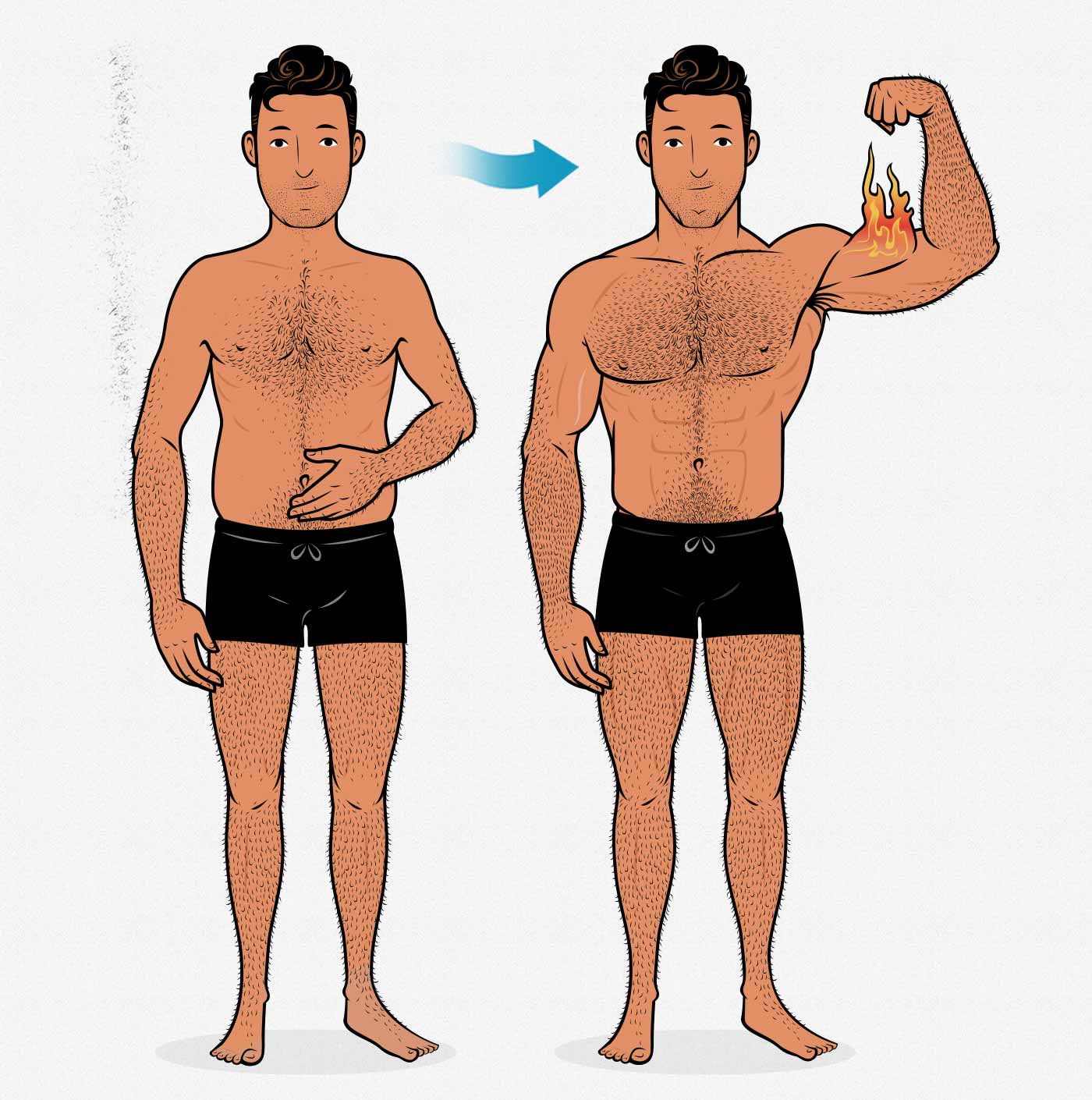
Illustration of a skinny-fat man becoming lean and muscular.

Why Is It Hard to Digest Food?

Eating a more abundant, varied, and nutritious diet can be incredibly good for us, especially if we’re skinny. If combine that diet with a good workout routine and a healthy lifestyle, we can build muscle, gain weight, and bulk up. These are all great things. But it doesn’t always go smoothly. Eating so much extra food can cause problems: bloating, indigestion, gas, constipation, and/or diarrhea.
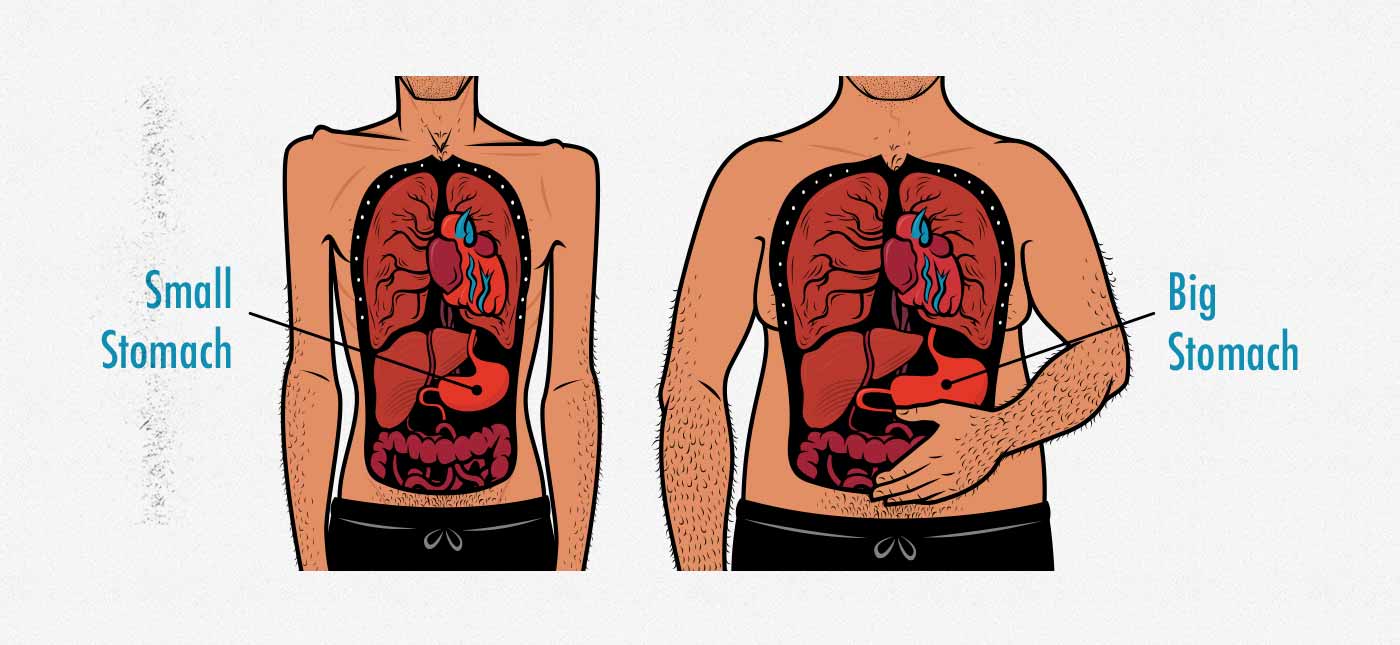
Illustration of the stomach size variation between skinny and overweight people.

One of the reasons why most skinny guys have trouble with traditional bodybuilding diets is that our stomachs are often smaller than average. If you’re a so-called “ectomorph,” with a thinner frame and a shallower ribcage, that means there’s less room for your stomach. If we compare that against the average man, not only does he have more room in his torso for his stomach, but he also has a history of overeating, which can stretch his stomach, making it bigger.

To make matters even more complicated, skinny guys are often “hardgainers,” in the sense that our metabolisms are more adaptive than normal. When we eat more calories, we spend more time standing, fidgeting, and pacing, burning off the extra energy (study). It’s totally subconscious. We don’t even realize we’re doing it. But it can burn off as much as 950 extra calories per day:
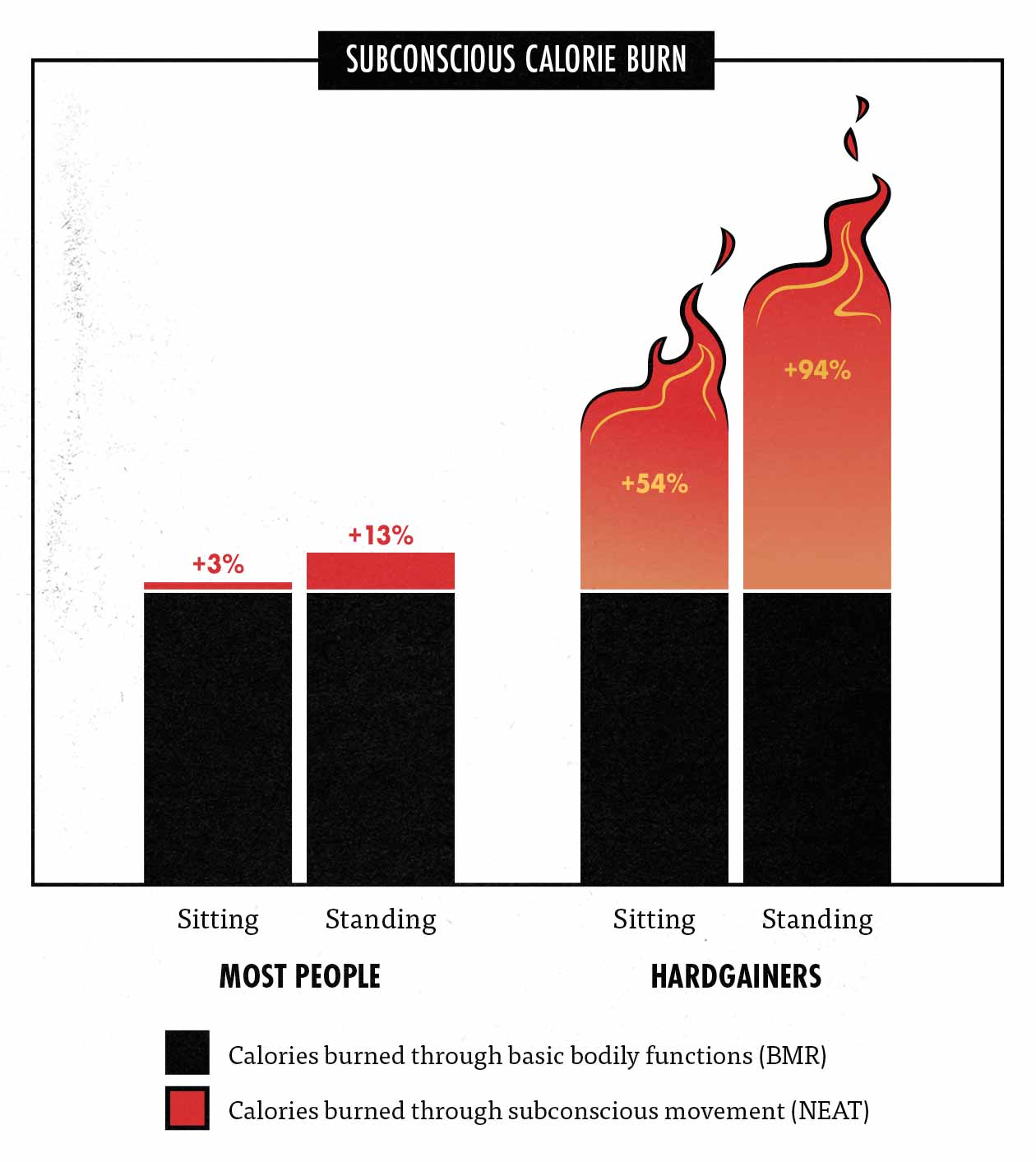
Graph showing that some people burn more calories that others because of their metabolisms.

So we have a situation where some skinny guys have more meagre appetites and smaller stomachs, but we also have much greater calorie demands. So we shovel mountains of food down, and we wind up feeling bloated and cramped, and we struggle with acid reflux and indigestion.

Improve Your Diet Gradually

If you’re sick of being skinny, it can seem prudent to totally overhaul your diet, getting rid of what isn’t working and building a better diet from the ground up. During my first bulk, I woke up one morning and started eating a totally alien diet. Nothing was the same. I ate a completely new breakfast, lunch, and dinner. The idea was to bulk properly. It backfired.
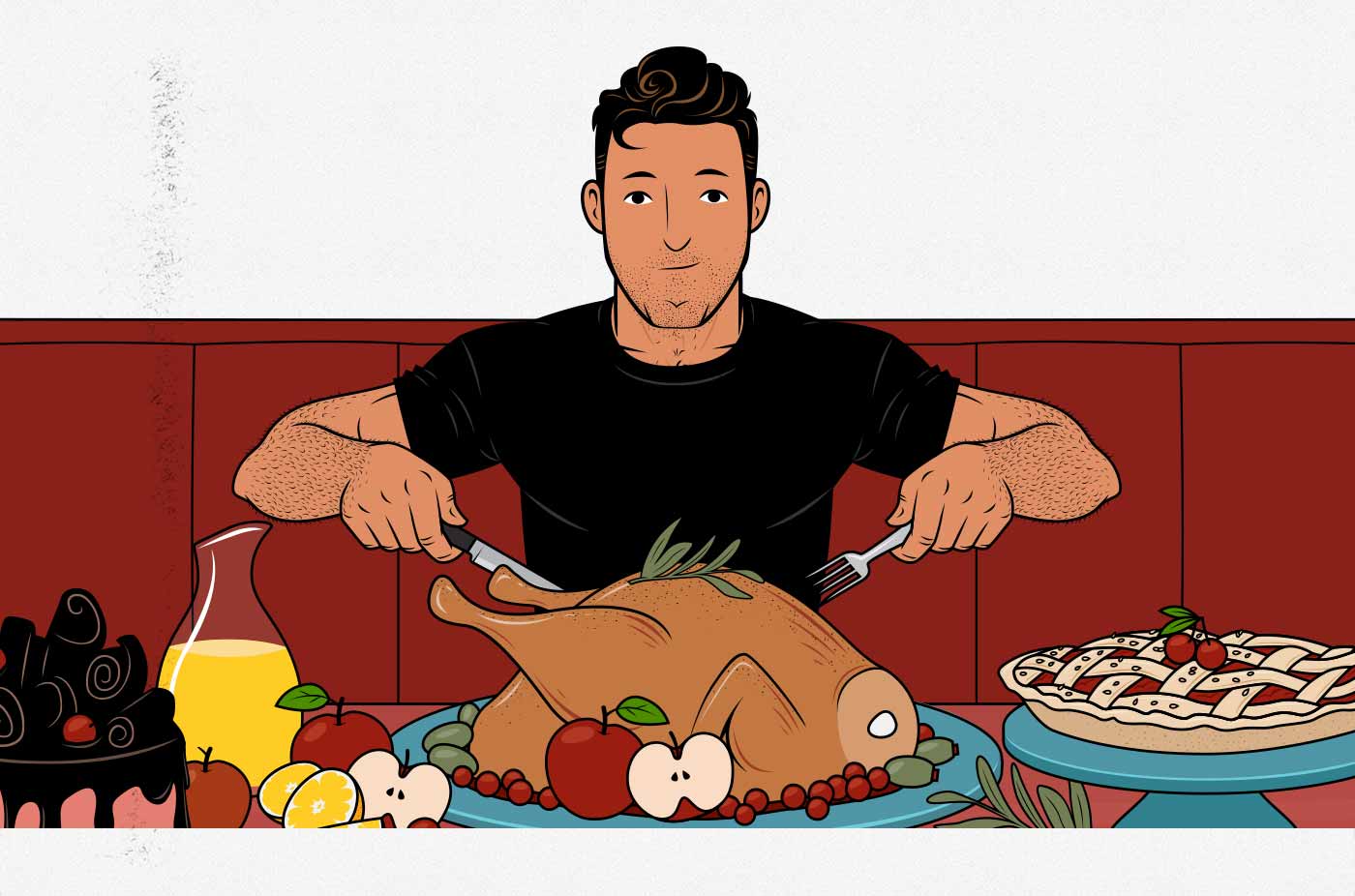
Illustration of a skinny hardgainer eating a feast in his attempt to bulk up, gain weight. and build muscle.

I was eating healthy foods. I wasn’t allergic to any of them. And yet I felt awful. I got bloated, I struggled to digest the food, and I started having acid reflux. In retrospect, it’s easy to see why. My digestive system was confused and overwhelmed. If you’ve ever switched up your diet while travelling, you know what I mean. It’s not that you’re eating bad food; it’s just too different too soon.

Our digestive systems adapt to our diets and lifestyles. We all get used to eating and digesting different foods, in different quantities, at different times. We foster different gut bacteria, produce different digestive enzymes, and get used to digesting different ratios of protein, carbs, and fats. Our stomachs stretch to fit the size of the meals we typically eat.

How to Fix Bloating & Gas While Bulking

It’s pretty common to experience bloating and gas while bulking. The root of the problem is often changing too much, too soon. Too much new food. Too much extra fibre. Too many calories overall.

Here are the most common digestive problems and how to fix them:

  • Bulking too aggressively: some skinny guys can benefit from bulking aggressively, gaining weight rapidly. However, that means eating in a larger calorie surplus. If you’re having digestive problems, you may have better luck eating in a smaller surplus, bulking leanly, and gaining weight more slowly.
  • Overly large meals: Eating bigger meals is an easy way to eat more calories. The problem is, if your stomach is still small, those bigger meals might not fit. You may find you have trouble digesting those meals, making you feel tired for several hours afterwards. You may even get acid reflux. Most people feel that way after Christmas or Thanksgiving dinner, but you’re inflicting that misery upon yourself every evening. Instead of eating bigger meals, eat more snacks. If you need to eat a bigger meal, walk it off. A 20-minute stroll can work wonders.
  • Extreme amounts of specific foods: When you start bulking, you have to get your calories from somewhere. Sometimes, people resort to eating large amounts of specific foods. Litres of milk, cups of peanuts, and mountains of whey. I’m sure you’ve heard that the dose makes the poison. When you eat huge amounts of any one thing, it often causes problems. Instead, eat a wider variety of foods.
  • Suddenly adding carbs: Carbs are fantastic for building muscle. They’re rich in energy, fibre, vitamins, minerals, and phytonutrients. However, if you were eating low-carb or ketogenic diet, suddenly adding more carbs into your diet can cause digestive problems. Instead, gradually add carbs back into your diet. Start with small serving sizes. Get used to them. Then consider adding more.
  • Intermittent fasting: When you restrict your feeding window, you’re forced to eat larger meals. Larger meals tend to be harder to digest, especially for people like us, with smaller stomachs and more finicky digestive systems. Instead, it’s better to eat smaller meals spread more evenly throughout the day. Start eating shortly after waking up. Have a snack right before bed.
  • Milk: Drinking more milk can be a great way to consume more calories, protein, and nutrients. However, to digest milk, we need a digestive enzyme called lactase. If you radically increase your milk intake, you might run out of lactase! So start with smaller servings and gradually increase your intake. Over time, your body will adapt.
  • Fibre: when you start eating more fruits, veggies, legumes, and grains, that means you’ll be eating more fibre. And fibre is great. It’s healthy. It’s good for your digestive system. But it’s possible to get too much of a good thing. Eating 30 grams of fibre per day is great, but what about 60 grams? 90 grams? There’s no specific limit. If you’re eating 30 grams, bumping up to 35 might be even better. If you’re eating 60, going up to 65 should be good. Try moving up by 5 grams of fibre per week until you’re in the 35–70 range.
  • Whey protein: When people start bulking, it’s common to consume quite a lot of whey protein. That’s usually okay, at least in the short term, but sometimes it can cause diarrhea. If that happens, diversify your protein sources. Try eating more lean meat, fish, milk, eggs, nuts, seeds, legumes, or other protein powders.
  • FODMAPs: most people digest FODMAPS quite well. However, there’s a substantial minority of the population who don’t, such as some sufferers of Irritable Bowel Syndrome (IBS). More on that in a moment.

The best way to build a healthy bulking diet, then, is to build upon your current diet. Try cutting out some junk food, adding some good food, and gradually ramping up your calorie intake. Take your time.

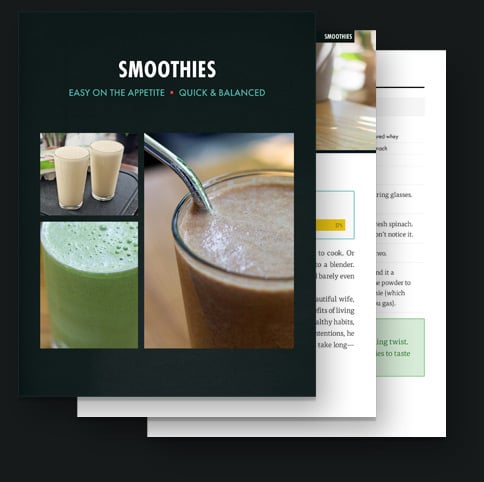
get our bulking recipes—smoothies, snack, & protein balls

4 free bulking recipes
How to Digest Food More Comfortably

When we start eating for muscle growth, we want to build on our current diet, making strategic changes gradually. Here are some good ways to approach it:

  • Increase your calorie intake by making your meals a little bit bigger, and by adding foods that are easy to digest, such as white rice or bananas.
  • If you need even more calories, try adding snacks. And again, choose snacks that are easy to digest. Trail mix often works well, especially if you choose trail mix made from foods you enjoy. (I mix peanuts, almonds, dried cherries, pumpkin seeds, and soy beans.)
  • Keep eating the good foods you already eat. If you enjoy eating tortillas, you don’t need to swap them out for potatoes. If you’re eating potatoes, you don’t need to swap them out for rice. You can keep eating the foods you’re already eating.
  • Choose foods that are easy to digest. If steak is hard to digest, try eating ground meat instead. It’s equally nutritious, but the grinding will make it easier to chew and digest. If you’re using protein powder, whey is often easiest to digest (unless you have trouble digesting dairy).
  • Add foods that improve digestion, such as yogurt, hard cheeses, bananas, and onions. But again, add these foods in little by little.
  • Be careful with fad diets. It’s usually better to avoid pop culture diets, such as keto, paleo, and intermittent fasting. It’s not that these diets are bad; it’s just that they aren’t designed to help people bulk up.
  • Avoid intolerances. Some people are allergic to eggs, have trouble digesting gluten, or can’t produce enough lactase to digest milk. The problem is you might not know what your allergies and intolerances are. If you’re adding new foods to your diet, add them gradually and in reasonable serving sizes.
  • Go on a walk after eating. A good way to get your digestive system moving is to get up and walk after eating a big meal. It doesn’t need to be a long walk, and you don’t need to do it after every meal, but if you’ve eaten so much that you want to lie down, it might be best to stand up instead.

Bulking with Irritable Bowel Syndrome (IBS)

Can You Bulk with IBS?

It can be hard to bulk with IBS, but you may have to. IBS is incredibly common, affecting as much as 20% of the population worldwide (study). It often causes people to become underweight. No surprise, then, that a large portion of our readers have IBS.

That’s where things get tricky. If you’ve been withering away, falling into a pit of atrophy, you may need to start eating a bigger diet before you’ve gained full control over your IBS symptoms. Adding more food into the mix can be another stressor, exacerbating your digestive distress. We need to be smart about this.

Marco is a certified nutrition coach with a degree in health sciences (BHSc). We have over a decade of experience helping skinny people bulk up, including those with a host of digestive issues. Still, if you fear you have Irritable IBS, seek out a dietician. They can give you personalized dietary advice. Combine their advice with the bulking methods from this article.

What is IBS?

IBS is a collection of intestinal symptoms, often including cramping, abdominal pain, bloating, gas, constipation, and diarrhea. These symptoms can come and go, changing in severity and duration, tormenting their victims with their capriciousness.

The IBS Bulking Diet

In the longer term, you can build a more robust digestive system. To do that, eat a diet rich in probiotics (fermented foods) and prebiotics (fibre). This will encourage the growth of a healthy microbiome, which has been proven to help with IBS (study). That can be difficult, though, especially if you’re eating a restricted diet. So another option is to take probiotic and prebiotic supplements.

In the shorter term, we can hunt down the foods stressing your digestive system. This helps to get rid of the symptoms, making it easier to eat a bigger and more nutritious diet. Here are some methods to experiment with:

  1. Eat smaller meals more frequently: this is good advice for most skinny people. It’s especially important for those with sensitive digestive systems. If you’re eating smaller, more balanced meals, you’re less likely to eat too much of any one nutrient at once.
  2. Try blending and mashing: It’s often easier to digest foods that have been pulverized a bit. Think of smoothies, mashed potatoes, soups, and stews. There are probably some protein powders that agree with you, too. A smoothie made from bananas, blueberries, spinach, a small handful of quick oats, a small handful of mixed nuts, and water should sit quite well. Even better with some kefir or Greek yogurt (if you tolerate dairy).
  3. Eat a low-FODMAP bulking diet: FODMAPs are found in certain carbohydrates. A low-FODMAP bulking diet would focus more heavily on proteins like fish, eggs, meat, and lactose-free dairy. On carbs like rice, quinoa, potatoes, oats, bananas, grapes, oranges, strawberries, blueberries, pineapples, bananas, and kiwis. On healthy fats like olive oil, avocado oil, nuts, seeds, cheddar, and feta. And on fibrous veggies like carrots, tomatoes, bell peppers, green beans, cucumbers, zucchini, and spinach. Herbs and spices tend to be fine, with the exception of garlic and onion powder. Try to eat single servings of a wide variety of these foods. (You can eat foods that aren’t on this list. Just pay attention to whether they agree with you or not.)
  4. Try eliminating common triggers: What happens if you cut out coffee or milk for a month? If it seems to help, great. Try reintroducing them one by one in smaller doses.
  5. Eat plenty of fibre: Fibre helps build a stronger digestive system. It also softens stool. Try eating more carrots, berries, peas, oatmeal, spinach, and a little sauerkraut. Don’t increase your fibre intake by too much too soon. Take it as slow as you want. Try adding 2–3 grams per day.
  6. Eat healthy fats in moderate amounts: Try eating more lean meats, fruits, vegetables, grains, and low-fat dairy products. Try to get more of your fat from nutritious sources like olive oil (for drizzling and tossing), avocado oil (for cooking), and nuts and seeds (without going overboard).

Experiment with these tips one by one. Take it slow. It takes our bodies time to adjust. If something is working well, give it a good 5 weeks before you reintroduce triggers or experiment with other strategies.

Conclusion

It’s common for skinny people to overburden their digestive systems when they first start eating a bigger bulking diet. It’s harder to digest more calories. It takes time to get used to new foods. But even so, there are some things we can do to make it much easier.

There are a lot of tricks, and we’ve covered them above, but most of it boils down to changing your diet gradually, avoiding abnormally large meals, and getting more of your calories from snacks. Over time, the extra nutrients, fibre, and probiotics will help you build a more robust digestive system. Be patient.
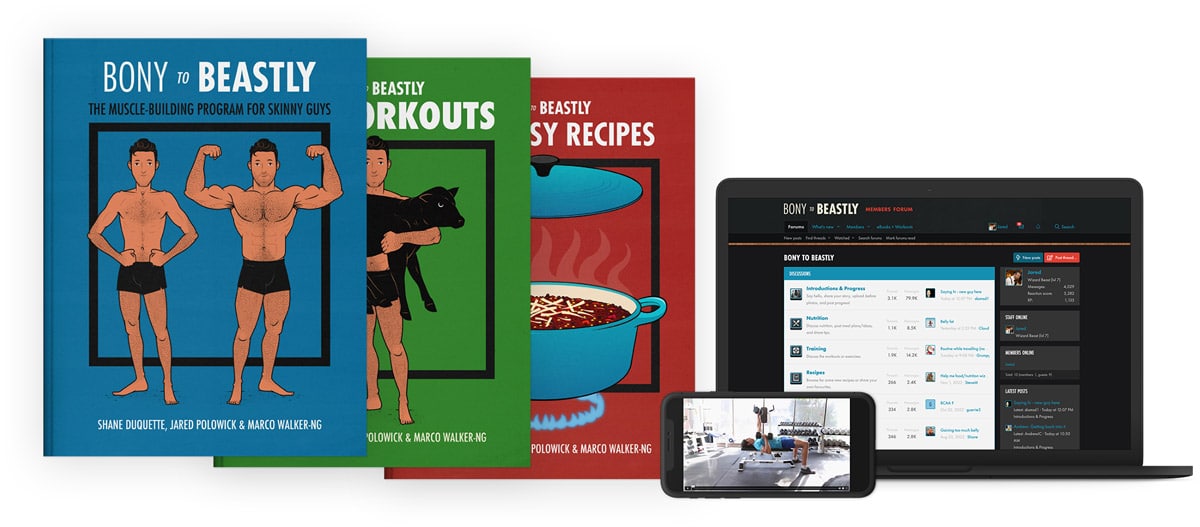
Photo showing the Bony to Beastly Bulking Program for Skinny and Skinny-Fat Guys

If you want to know all the ins and outs of building muscle, we have a free newsletterIf you want a full foundational bulking program, including a 5-month full-body workout routine, diet guide, recipe book, and online coaching, check out our Bony to Beastly Bulking Program. Or, if you want a customizable intermediate bulking program, check out our Outlift Program.

Shane Duquette is the founder of Outlift, Bony to Beastly, and Bony to Bombshell, each with millions of readers. He's a Certified Conditioning Coach (CCC), has gained 70 pounds, and has over a decade of experience helping more than 15,000 people build muscle. He also has a degree in fine arts, but those are inversely correlated with muscle growth.

Marco Walker-Ng is the founder and strength coach of Outlift, Bony to Beastly, and Bony to Bombshell. He's a certified trainer (PTS) and nutrition coach (PN) with a Bachelor's degree in Health Sciences (BHSc) from the University of Ottawa. He has over 15 years of experience helping people gain muscle and strength, with clients including college, professional, and Olympic athletes.

How to build 20 to 30 pounds of muscle in 30 days. Even if you have failed before

Muscle-Building Mini-Course via Email

Sign up for our 5-part muscle-building mini-course that covers everything you need to know about:

  • Hardgainer genetics and how to make the most of them.
  • How to take a minimalist approach to building muscle while still getting great results.
  • What you need to know about aesthetics, health and strength while muscling up.

    38 Comments

    1. Breonna on June 12, 2012 at 2:37 am

      Shane, I think you’re allergic to eggs, dairy, protein powder, and nuts. Gassy monster indeed.

      • Shane Duquette on June 12, 2012 at 3:03 am

        Hey a burp now and then isn’t so bad 🙂

    2. roz on November 9, 2012 at 8:14 pm

      sounds like my life!

    3. Alexander on June 7, 2014 at 3:23 pm

      I thought it’s gluten and milk that bloats me but it turned out its fibre and processed milk. No wholemeal no too many veg and no whey protein and life is good once again.

      • Amin on August 23, 2016 at 3:28 pm

        Hey Alexander I wonder do you steam your veggies or eat them raw?

    4. Galev on March 8, 2015 at 5:43 pm

      So here I was wondering “I should google this gas thing, it mustn’t be normal, there must be a way to deal with it.” And google gave me some results and I was confirmed in my suspicion that it is probably the supplement I started taking (beef protein with some carbs).
      There weren’t any suggestions other than “it should go away in a few weeks”.
      “I wish there was something about thin on Bony to Beastly…” And then I spotted the link. Crazy how you guys really cover everything. 😀

      I’m not going to be able to mix my supplement with anything because I only take the one (and only twice a week). But I’ll try out pro-biotic yoghurt. My only concern is that I may be lactose intolerant (I have an appointment to have it tested). So I don’t know what I’ll do if that turns out to be the case.

      • Shane Duquette on March 8, 2015 at 10:19 pm

        Ahaha we try our best! Glad we could help.

        Even if you’re lactose intolerant some types of dairy may still agree with you. There are digestive enzymes and lactose free milk. And your lactose intolerance may go away over a few weeks as you slowly acclimatize to drinking milk.

        That’s a very novel type of protein powder too. You may have more luck with something classic like whey protein isolate (which doesn’t have lactose—the sugar in milk—in it).

        Good luck!

    5. Scott Pilgrim on May 24, 2015 at 9:05 pm

      digestive enzymes from actual pineapples?
      or will Pineapple juice do?

      • Shane Duquette on May 26, 2015 at 4:18 pm

        The more processing a food goes through the less cool stuff it’ll do. Less fibre, or vitamins, or perhaps digestive enzymes, etc. If you blend a pineapple up into a smoothie that’d probably be comparable to a fresh pineapple. If you juice it using a juicer, a little less. If you’re getting pasteurized store-bought juice, even less. At what point do you lose the enzymes? I don’t know :S

    6. Derek on August 9, 2015 at 7:32 pm

      How the heck can you put on weight as a skinny guy if you have an intolerance to Dairy, Eggs, Nuts, and Wheat?! Those are like the primary muscle building foods right there. When you throw out Whey, Dairy products like Cottage Cheese, Milk, Almonds, Nut Butters, Eggs, and breads and pastas; What are you left with? Chicken, Rice and Brocolli at every meal? Yay…. (sarcasm)

      • Shane Duquette on August 10, 2015 at 10:44 am

        Hey Derek,

        It’s definitely discouraging when you’re faced with a lot of restrictions, but it’s definitely still possible. We have members who are following strict paleo diets (low carb, no potatoes or fruits, no grains, no legumes, etc), vegans, people with type 1 diabetes, people with Crohn’s disease. Just takes more cleverness.

        My favourite muscle-building meal is chili cooked a dozen servings at a time. Pretty delicious, quick to cook the first time, very easy to reheat at your convenience. My second favourite recipe is stew, for similar reasons. Lately I’ve been trying to do the same thing with stir fries and curries to mix things up. None of these have dairy, eggs, nuts or wheat.

        If you wanted a protein powder, instead of whey protein, for example, you could get rice/pea protein powder. Something like SunWarrior or Vega.

        Does that help at all?

    7. Ea on October 7, 2015 at 8:31 am

      Hi Shane ,
      I have been using maltodextrin after workouts for quite a while now, and it s working crazy good. The thing is gulping down 100grams of if started to give me nausea and i cant eat for like 3-4 hours afted that . This started a few weeks ago. Should i stop using it and eat food ? ( i really dont wanna do that)

      • Shane Duquette on October 7, 2015 at 7:16 pm

        Hey Ea,

        Really glad to hear the maltodextrin has been helping!

        I think the first step will be trying to narrow down why all of a sudden you’re getting nauseas. Your body has a bunch of regulatory systems designed to keep you weighing about the same as you did yesterday, last week, and last month. Eating easily digestible low fibre liquid calories is a brilliant way to slip under the radar of those various regulatory systems. However, oftentimes there’s only so much we can do to trick them. After a while your body realizes that you’re gaining weight and it tries to re-establish homeostasis.

        The good news is that if you gain 20 pounds and maintain those gains for a little period of time, you may very well find that you naturally maintain that weight forever. Those same mechanisms start working in your favour, maintaining your new burly figure.

        For now, maybe just take a break from the maltodextrin. Take a couple weeks off. Stop overeating. Maintain your gains. Regain some motivation. Remember what hunger feels like. Then go back to bulking 🙂

        Perhaps have some fermented foods, onions, and plenty of fibre (fruits, veggies, grains, legumes, oats, etc). That should help your digestive system by encouraging a nice lush microbiome.

        Does that make sense / help?

    8. Brian on October 20, 2015 at 12:46 am

      After every heavy workout I use a Blender Bottle, with 14 mL of milk and ~60 grams of whey protein and gulp it quickly.(I weigh 135 lbs and consume roughly ~120-150 grams or protein per day) After my most recent workout, I felt bloated, precisely on my lower abdomen, and terribly constipated. Is this normal, as for completely changing my diet? Or am I doing something wrong?

      Thanks.

      • Shane Duquette on October 20, 2015 at 12:09 pm

        It’s pretty normal to have trouble digesting large amounts of protein if you suddenly start eating large amounts of protein. As far as I understand it, your body hasn’t prepared the digestive enzymes that it needs yet. This shouldn’t be harmful, and your body will in time start producing the digestive enzymes that it needs to efficiently digest all of that protein.

        In the meantime though

        With weightlifting you start with light weights, become stronger, progress to heavier weights. Similarly, you could consume smaller amounts of protein at a time, increasing that amount slowly—a little bit at a time—and gradually improve upon the amount that you can comfortably consume 🙂

    9. ajay on July 3, 2017 at 9:43 am

      hello shane my name is ajay from india ,i started bodybuilding in 2004 switched to strength training which i have continued till date .i was 56 kg when i started now i am 71 kg(i dit a cutting cycle reduced 15 kg because it was fat ,no strength loss) my stats are deadlift conv. 164 kg squat 120 kg bench prob 90 kg weighted dip 40 kg 3-4 reps weighted chin up 40 kg 3 reps .i also run twice a week alternately 8 km(36 min) 100 mt 12sec .(i have to run no option)what i want to know is this is there any way to know when to increase my diet ? i exercise 2-3 times a week 4 hrs and i dn’t have any symptoms of overtraining and i sleep< 7 hrs can't sleep more .also my wrist circumference is 16.5 cm ankle width 21.5 cm height 177 cm .is there some time after which i know i can be no more neuro muscularly efficient and have to increase my diet ?

      • Shane Duquette on July 4, 2017 at 1:53 pm

        Hey Ajay,

        Calories, thankfully, are simple. If you aren’t gaining weight, it means you aren’t eating enough calories to gain weight. So you know when you need to increase calories if you’re not gaining as much weight as you’d like to be gaining. On the other end of the spectrum, you’re eating too many calories when you’re gaining so much weight that you’re gaining fat.

        Unfortunately, that doesn’t make it easy. It can be a pain to track calories, and it can be very difficult to eat enough to gain weight. The path, however, is clear. So be smart, and good luck! 🙂

        • ajay on July 5, 2017 at 12:34 am

          thank you for the reply ,the strength that i have gained should i have gained more of it ,i mean what about the other members here of the same height and dimensions does anyone for eg deadlift 200 kg or squat 150 or 140 kg for eg. i’ve spnt long time in this so i’m just curious

          • Shane Duquette on July 6, 2017 at 1:19 pm

            We’ve got a few members deadlifting at least 200kg, benching at least 100kg and squatting around 150kg. Most of them are around the 80kg mark, give or take a few kg. Mind you, these are proportionally very long guys who are averaging around 6′ tall. It’s totally possible for a regular guy to get those numbers with a lighter bodyweight, but I would imagine that he would be on the shorter side because that would mean more of his weight would be muscle (rather than bone, tendon, etc), and there would be a shorter distance he would need to lift the weights.

            With more mastery of the lifts, you can definitely get stronger while staying at a similar bodyweight. If your goal is to get stronger at a good speed, though, I would recommend trying to build more muscle mass.

    10. Matt on November 6, 2017 at 4:37 pm

      Hi Shane- I’ve been weight-training for almost a year now. I’m a hardgainer ectomorph and since starting I’ve been taking 2-3 servings of whey isolate to reach my macros. I recently added a “lactose-free” whey gainer since I’m struggling to gain weight. However, since starting weight training, I’ve been chronically bloated, could this be due to the shake’s artificial sweeteners or lactose? I’ve tried lactase and digestive enzymes and they didn’t work. I have Crohn’s, I believed you mention those with Crohn’s should focus on a Paleo diet. I’d appreciate any feedback. Thanks!

      • Shane Duquette on November 10, 2017 at 7:22 pm

        Hey Matt,

        For whatever reason, we have a lot of complaints about weight gainers from our members. Some guys do fine, but many are chronically bloated, permanently full, or running into a whole variety of digestive issues. That certainly happened to me when I tried them. I’d feel lethargic for hours afterwards. I’m sure some are better than others, but all of the ones I tried had that effect on me.

        Why? It’s hard to say. But the quality of them is pretty low, so it’s not that surprising either. If you force-fed yourself a few slices of cake every day, you’d expect to feel like crap. Same deal with weight gainers.

        We recommend making your own, homemade weight gainer, and then only it having post-workout. That seems to prevent a number of issues:
        https://bonytobeastly.com/bulking-supplements-for-skinny-guys/

        As for Crohn’s, I don’t really want to step in there. That’s not my area of expertise and I’m neither a dietitian nor a nutritionist. We can definitely help you build muscle with your diet, but we’d rather do it by working within the nutritional guidelines you get from a medical professional. So we won’t tell you whether you should eat grains or not, but if you can’t, we can definitely help you build a killer muscle-building diet without any grains in it 🙂

    11. Matt on November 11, 2017 at 5:05 pm

      Hi Shane, I appreciate your feedback. I’ll read your article on “Muscle-Building Supplements for Ectomorph” and focus on creating homemade weight gainers and avoiding market mass gainers. As for my protein supplement, I’ll try to switch to another brand of whey isolate without artificial sweeteners and see if I still have bloating issues. If I still do, I’ll go for egg, beef , or plant-based proteins. Thank you for your help!

    12. Harshitha Akhil on December 17, 2017 at 2:52 am

      Hey am Harshitha Akhil from India and I am too skinny … I tried hell lot protein shakes but din work out … I eat too much and since I am vegetarian , I can have nly veg foods …
      How much ever I try I can’t put on weight .. can you please suggest me something about it?

      • Shane Duquette on December 19, 2017 at 1:30 pm

        Hey Harshitha,

        If you want a recommendation for a good muscle-building program that will work even if you’re a vegetarian, I’d recommend our Bony to Beastly Program. Vegetarians build muscle and gain weight just as quickly as everyone else, and we even include vegetarian recipes along with the program 🙂

        https://bonytobeastly.com/the-program//

        If you want some free bulking information, every article on this site should help 🙂

        • Harshitha Akhil on December 20, 2017 at 10:32 pm

          That would surely help me out …
          But the problem is since I stay in hostel and I have to abide by the rules of the hostel I cannot go gym and all .. is there any alternate for that ?

          • Shane Duquette on December 26, 2017 at 10:42 am

            They won’t allow you to lift weights as part of the rules of the hostel? You could do bodyweight exercises instead. They won’t work as well, but you should still be able to make good progress.

    13. Persephone on May 3, 2018 at 9:10 am

      Dunno if anyone reads this thread but I recently found it and wanted to share my problem with you guys.
      I’m female, 30 years old, 1,60m short and currently weigh around 47,5kg.
      To find out my macros/calorie requirements for muscle gains I used an online calculator on bodybuilding.com. I started hitting my macros on a daily basis, eating 80% whole/non-processed foods and a lot of veggies/fruits. It all went finr for 1,5 months, then I added 150kcals more because I wasn’t gaining weight at all and two days ago trouble hit me hard. I’m bloating, feel sick and hate the idea of eating (but I still force myself to do it). My gut still appears to function properly though, I’ve no constipation and my pee has a normal colour.
      Still, I’m getting a bit scared and am wondering if I should stop bulking completely or try to eat a little less.
      When I started bodybuilding I was a skinny type of girl, bones showing and blah (I’m not an anorexic though) and I made some small gains but of course I want more and I know that I have to eat…but since I feel like crap atm, I dunno if I can go on like this.
      Help…

      • Nicole on May 17, 2022 at 2:41 pm

        Oh wow… you are describing my exact situation. This is a very old post, but if by any chance you see my message; do you mind offering any updates. Thank you!

    14. Jake on December 8, 2021 at 11:32 pm

      I finally found an answer some useful information for the first time. It felt like I was the only one dealing with this problem. I’m a hard gainer and have been dealing with acid reflux for such a long time on this bulk. I’m trying to keep an earlier schedule so I don’t eat so late before bed I’m thinking that’s what causes it but reading this also makes a lot of sense with a hard gainers stomach having to get use to a bulking diet my lifts continue to go up on my bulk but but this heart burn is annoying hopefully I’ll soon adjust.

      • Shane Duquette on December 9, 2021 at 10:47 am

        Oi, shoot. I’m sorry you’re struggling with this, too.

        The good news is, you can probably fix it. I know for me, at least, once I adjusted my schedule and habits a bit, the problem went away. It’s been years now since I’ve had any heartburn or acid reflux, even when eating enough food to continue bulking up.

    15. Aletta on March 31, 2023 at 1:47 pm

      THANK YOU FOR THIS! As a woman and a teeny tiny, I had no idea what was wrong with me but this perfectly explains it. I have been building muscle and seeing some improvement but feel like I am entering my second trimester by the end of each day. Guess I got a little too excited to eat more food hahaha

      • Shane Duquette on April 10, 2023 at 6:35 pm

        Woot! Glad it helped, Aletta.

        If you’re reading this response at the end of the day, congratulations on the pregnancy!

    16. Samuel on June 21, 2023 at 9:56 am

      I eat around 3500 calories a day and am slowly gaining weight. However, when I wake up I have morning diarrhoea. Can you guys help? I don’t think I’m lactose intolerant.

      • Shane Duquette on June 27, 2023 at 4:14 pm

        Hey Samuel, congratulations on the weight gain! That’s great.

        Oi. A few things can cause diarrhoea. Eating too much spicy food can do it. So can an intolerance, yeah. In your case, maybe try scaling the dairy back to where it was before you started noticing symptoms. Maybe you’re past the threshold of how much dairy you can comfortable digest.

        I’m not qualified to go too deep on this, and it’s not such a common issue that I have any special insight. If it keeps up, you might want to check it out with your doctor.

        I hope it clears up soon!

    17. Stan on December 29, 2023 at 9:16 am

      This is literally the only article on the internet which addresses building muscle with IBS. I recently got diagnosed with, IBS with diarrhea (IBS-D). Lost all of my weight and gym progress (lost nearly 16 lbs), and feeling like shit. Also, I’ve learned there’s no cure and I’ll have to deal with this my whole life. It’s like I’m doomed to stay skinny forever. It’s really difficult to eat in a calorie surplus on a low fodmap diet and smaller meals. You can only eat so many meals in a day. Is there still hope for me to achieve my physique goals? Is it really possible to build and maintain a muscular body with IBS? Or would IBS be a limiting factor, now or at some point in the future? Would I be able to tolerate supplements, like creatine, whey etc.?

      • Shane Duquette on December 29, 2023 at 3:53 pm

        Oi, that sounds frustrating. I’m sorry to hear that, man.

        I don’t want to disagree with an expert you met with in person, but I wouldn’t assume it’s permanent. There’s new research coming out about IBS every month. I’m particularly interested in the research on probiotics and soluble fibre (like psyllium powder), but there are a few different streams of research for managing the different types of IBS. It could be that there’s a way to get rid of it. You might want to see a different expert at some point.

        You can bulk by eating smaller meals more often. Low-FODMAP foods like chicken, rice, oats, and bananas are great for bulking. It’s definitely harder to eat a restricted diet, but you’ve still got tons of great options.

        IBS is fairly common in our online community. They still manage to get great results. You’ll struggle at first, but it gets easier as you gradually figure out the approach that works best for you.

        Maintaining a muscular physique isn’t too difficult. If you can bulk, you can keep the muscle you build. I wouldn’t worry about that. You’ll occasionally lose a few pounds while sick, stressed, or having a bad bout of IBS. You’ll need to intentionally overeat for a couple of weeks to regain those pounds. That’s about as bad as it gets, and it isn’t too bad.

        You don’t need supplements to build muscle. It’s okay if they don’t agree with you.

        You can probably supplement with an unflavoured whey protein isolate. Unflavoured whey won’t have the artificial sweeteners that cause gas. Whey isolate has virtually no lactose. There will be some trial and error, though. I can’t say for sure what will work for you.

        Anecdotally, creatine seems to be fine when taken in small enough doses with enough water. I’d try something like 3g mixed into a tall glass of water. Some studies show that it can help with IBD, but that doesn’t mean it will help with IBS, and it doesn’t mean it can’t cause issues.

    18. Stan on December 30, 2023 at 7:53 pm

      Thanks for the encouraging response Shane!
      Is soluble fibre (like psyllium) good for IBS overall or should it be limited during diarrhea?

      • Shane Duquette on December 31, 2023 at 11:07 am

        Hey Stan, I’m not sure. Psyllium seems to be better for IBS with constipation. I’m not sure how it affects IBS with diarrhoea. It could be that it helps in both cases. The research isn’t all that extensive.

        I’m also not sure how much fibre you already have in your diet. When I was having digestive problems (mainly with bloating and acid reflux), gradually increasing my fibre intake helped. There are some low-FODMAP fibre sources that might be worth trying. But again, I’m not sure.

    Leave a Comment