
How to Know if You’re Gaining Muscle or Fat
Let’s imagine you’re bulking, trying to build muscle leanly. You’re getting heavier, filling out your clothes, and your muscle measurements are increasing. That sounds good, but your waist is getting bigger, and your stomach seems a little softer. How do you know if you’re gaining muscle or fat?
Or let’s say you’re recomping, trying to build muscle and burn fat at the same time. How can you know that it’s working? What signs of muscle growth and fat loss should you look for?
Same with cutting. You need to know if you’re losing muscle or fat.
The temptation is usually to use a BIA bathroom scale and let it estimate your body fat percentage. That doesn’t work. It isn’t even close to accurate enough to be useful. You could get an InBody scan at the gym or a DEXA scan. Those are more accurate. But they still aren’t nearly accurate enough.
There are far better signs of muscle and fat gain (or loss). This can be cheap and easy, too. You can do it at home right now.
Don’t Use BIA, InBody, or DEXA
In this article, I went deep into how bathroom scales, InBody scanners, and DEXA are okay at giving you a rough estimation of your body fat percentage, but they aren’t nearly accurate enough to track changes in muscle or fat over time, especially if you’re gaining or losing weight.
Those tools don’t measure your body composition. They measure how quickly signals pass through your body, and then estimate how much lean mass you’re holding. I know DEXA is praised for its accuracy, but it’s only accurate when averaging results across large groups of people. It’s good for research, not for tracking progress.
DEXA is often off by 5% in either direction, even when measuring the same person with the same machine. The most accurate method (the four-compartment model) estimated that a woman lost 5% body fat. DEXA estimated that she gained 5% body fat.
That’s a 10% disparity in body fat estimations, and DEXA is probably on the wrong side of it. Worse, DEXA didn’t even seem to get the direction of the change correct. Imagine how dismayed that woman would have been to learn—falsely—that she had gained 5% body fat after nine weeks of trying to lose fat.
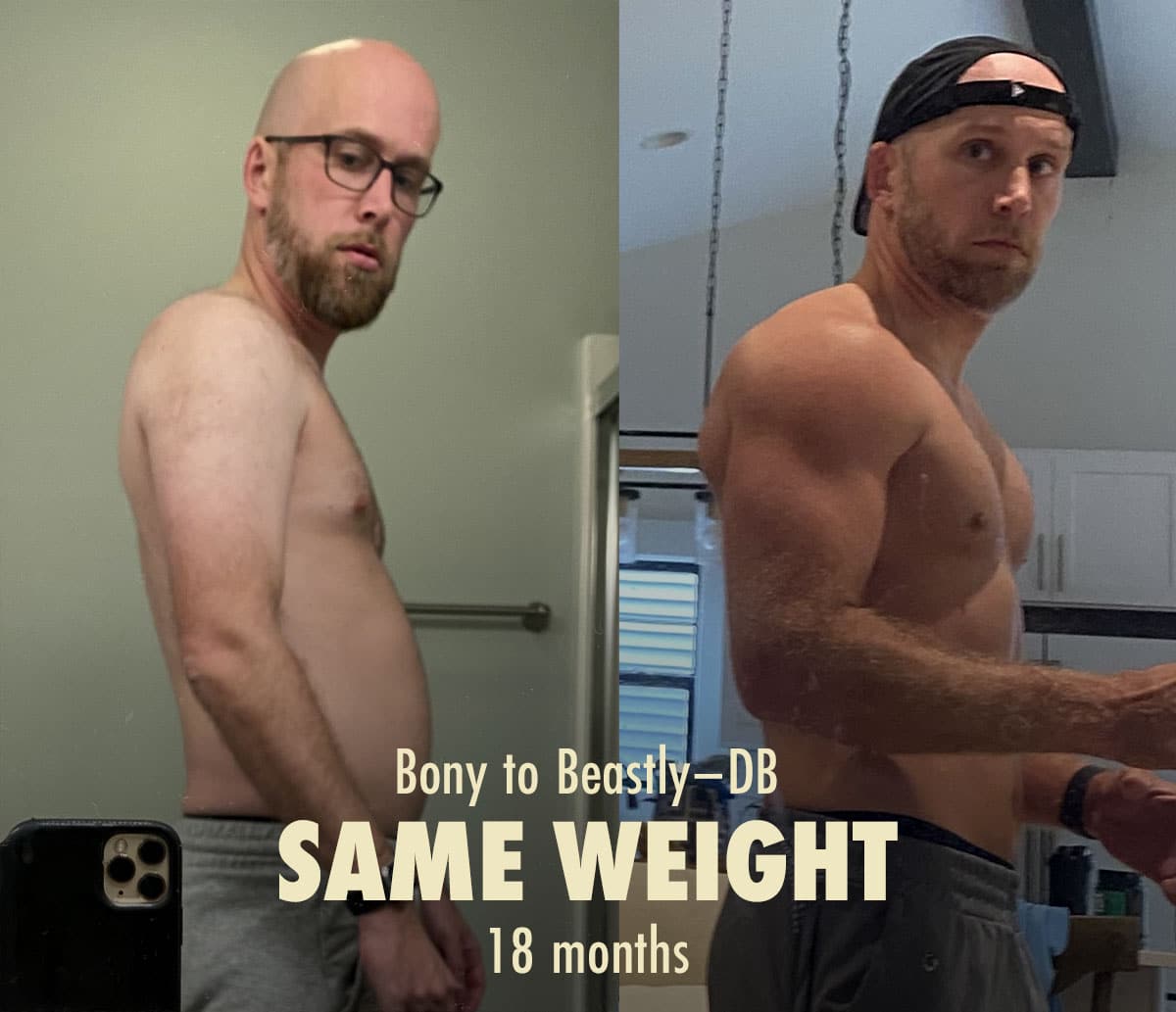
You’ll get a more accurate idea of how your body composition is changing by comparing photos. For example, a BIA scale can’t see much difference between DB’s before-and-after photos (above), but your eyes can.
We can do better than that, though.
The Problem with Proxies
When you estimate your body fat percentage, you get a number that isn’t very useful. It’s just a proxy for what you actually care about. For example, here’s a DEXA scan showing me at 11% body fat:
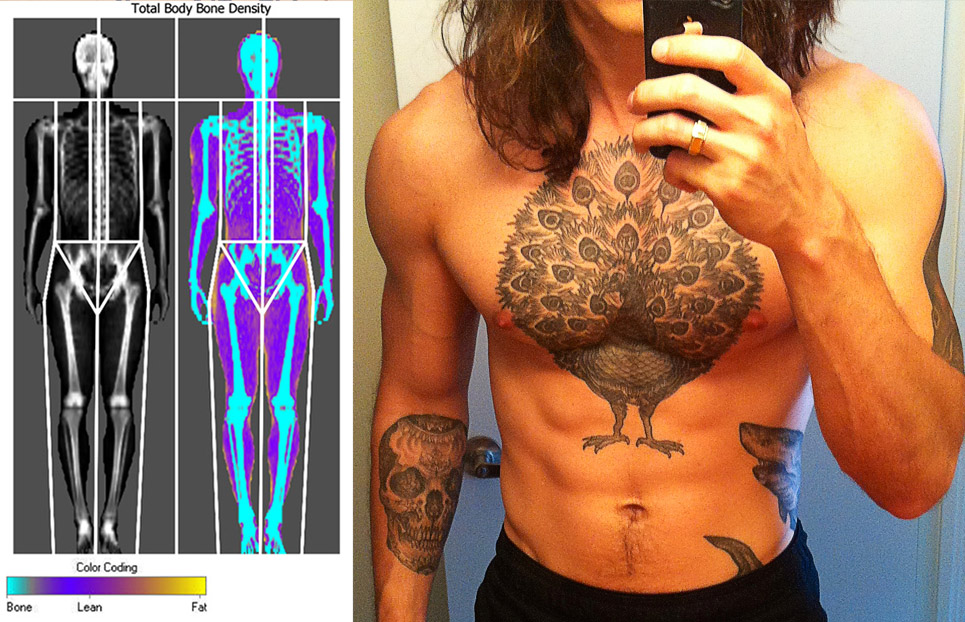
At first, this DEXA scan might seem useful. My goal was to bulk up, stay healthfully lean, and have at least a faint hint of abs. By this point, I’d gained 55 pounds, and DEXA estimated my body fat at 11%. That’s definitely lean enough to be healthy, and it’s probably lean enough to have abs.
It’s better to track what you actually care about. If you look at that quick selfie I took, you can see that it’s giving me far more direct, perfectly accurate information. I wanted visible abs, and I could see them.
The only time a body fat estimation is useful is as a snapshot in time. You can’t use it to track progress. But that snapshot doesn’t tell you anything. Maybe you’d like to get leaner. Perhaps you’d like to get bigger. Either way, the number doesn’t help.
At this point, you can probably spot the problem. Body fat estimation isn’t anywhere close to being accurate enough to tell you you’re gaining muscle or fat. You can’t use it while you’re bulking or recomping.
But we still need a way to measure our progress:
- If you’re bulking, you need a way to know what proportion of muscle and fat you’re gaining. If you’re gaining too much fat, increase the stimulus, improve your diet and lifestyle, or slow your bulk down.
- If you’re recomping, you need to know if you’re building muscle and losing fat. If it isn’t working, you need to increase the stimulus, improve your diet and lifestyle, or shift into a bulk or cut.
- If you’re cutting, you need to know if you’re losing muscle or fat. If you’re losing pure fat, you can stick with it. If you’re losing muscle, you need to increase the stimulus, adjust your diet and lifestyle, or slow down the cut.
So, how should you track your progress?
The Redemption of Body Fat Percentage
I’m not against body-fat estimates. It’s important to have a sense of how much fat you need to burn to see your abs. That’s part of my job as a coach.
If someone signs up for one of our programs and tells me they want abs, I need to help them plan their cut. It’s important for me to be able to say something like: “You’re 200 pounds and about 25% body fat, so I think you’ll need to lose about 20 pounds to get a nice hint of abs.”
When I’m making that guess, I’m taking a few things into account:
- He looks muscular enough to have abs at 15% body fat.
- He needs to lose about 25 pounds of fat to reach 15% body fat.
- He’s eating less food, so he’ll have less food in his digestive system, and his muscles will lose some glycogen. That means a few pounds will disappear when he starts cutting, and then reappear when he stops. We need to factor that out.
- He’s far enough away from his muscular potential, diligent enough, and following a good enough program that I think he can gain at least a couple of pounds of muscle while cutting.
- He plans to take creatine, which will likely add a couple of pounds of lean mass.
When I tally it up, I think we’ll want to aim to lose 20 pounds over 20 weeks. We can plan for a 5-month cut and adjust along the way. That’s the kind of thinking that goes into a cutting transformation like this:
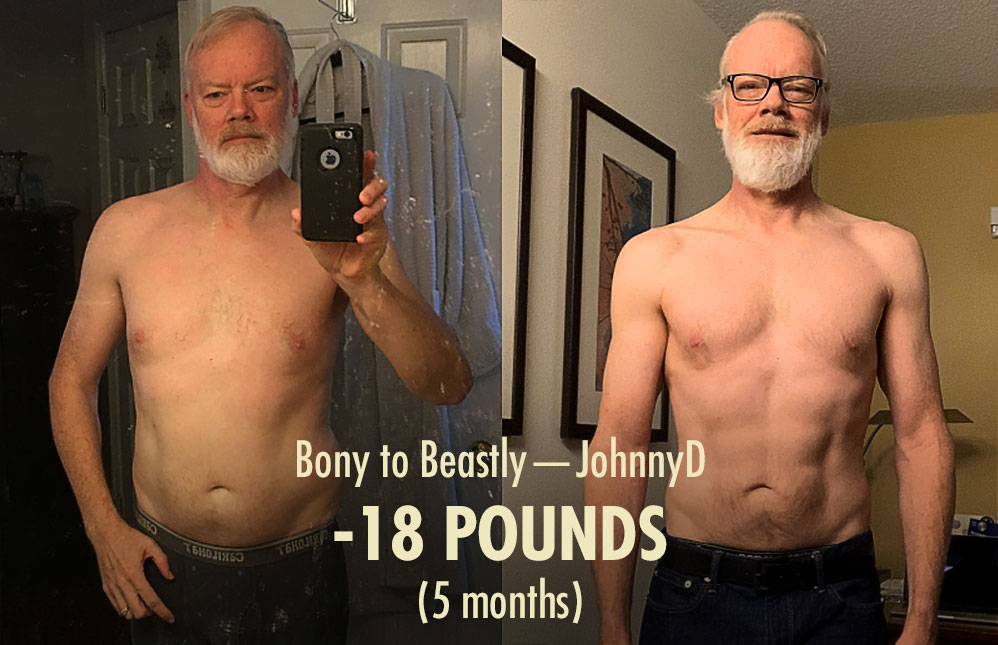
If you’re trying to do this yourself, stepping on a scale may be more accurate than making a visual estimate, especially if you’re over 20% body fat. It’s just that we need to keep in mind that whether we’re using my Discerning Eye or a BIA scale, neither is super accurate. We’re making rough estimations.
More importantly, BIA scales and DEXA aren’t discerning enough to be directionally correct. It’s okay to use them to get a rough idea of where you’re starting, but you can’t use them to track your progress. It can’t distinguish between muscle and fat gain. Once you’ve started your transformation, continue weighing yourself, but stop using your scale’s BIA function.
Measure What Matters
I would measure what lines up best with your goals:
- If you want to be strong and muscular, track progressive overload. Write down how much weight you’re lifting and how many reps you’re getting on each exercise. See how that changes over time. If you bring a 185×6 bench up to 225×8, you know for sure you’ve gotten stronger, and I bet you’ll have gained a ton of muscle size to go along with it. This is by far the most important metric to track. Bulking should make you dramatically stronger forever, recomping should give you steady strength gains on most exercises most weeks, and cutting shouldn’t sap your strength.
- If you’re bulking/cutting, weigh yourself on the scale every week. If you aren’t gaining weight, you aren’t bulking. If you aren’t losing weight, you aren’t cutting. If you’re steadily gaining/losing weight at a good rate, you’ll know you’re eating the right amount of food. If you aren’t, you can adjust how much you’re eating.
- If you care about the health benefits of getting leaner, track your waist circumference. If your waist is getting smaller, you can be confident you’re losing visceral fat, even if you aren’t losing weight, even if your overall body fat percentage stays the same. It also measures the size of your abs, obliques, and spinal erectors, so smaller isn’t always better, but it’s still a great way to track progress, especially when cutting. A good rule of thumb is to trim your waist circumference down to half your height or less, and then don’t let it cross that threshold again, even when bulking.
- If you want to get bigger, track body-part measurements. You can measure the size of your shoulders, flexed biceps, and thighs with a tape measure (like this cheap one on Amazon). You can measure your neck, calves, forearms, and hips, too. Fat gain can bloat your measurements, but you can track your waist circumference and take progress photos, giving us a holistic view of how much muscle and fat you’re gaining. A good rule of thumb is that your shoulder circumference should grow the fastest, and your waist shouldn’t grow faster than your biceps.
- If you care about aesthetics, compare photos. With clients, we review progress photos every five weeks for beginners, and every fifteen weeks for more advanced lifters. It’s easy to see how things are going, especially when you’ve been doing this full-time for fifteen years.
- Tracking visceral fat. Body fat is a mix of subcutaneous fat (over your muscles) and visceral fat (around your organs).
- Visceral fat: The best way to track the fat around your organs is to measure your waist circumference at the height of your belly button. If your waist is healthfully thin, you don’t need to worry about visceral fat.
- Subcutaneous fat: You can measure the fat over your muscles with body-fat callipers (like these cheap ones on Amazon). Callipers are far more accurate than BIA and DEXA. They let you actually measure your fat. This is what serious bodybuilders do. But it’s overkill for most people. You don’t need to worry about it.
At this point, you might have an objection. When you get a DEXA scan, it tells you how much actual muscle you have, and it can even tell you where that muscle is.
For example, with DEXA, you can see how many grams of muscle you’ve added to your right arm, whereas when you measure your biceps circumference and track your biceps curl strength, you’ve got body fat and coordination muddying the waters. It seems like a less direct way to measure muscle gains.
That’s true, but DEXA isn’t accurate enough for those numbers to be useful, especially when tracking progress. It will tell you how many grams of arm size you’ve gained, but you’ll have no idea if it’s correct. It’s useless information.
And DEXA isn’t directly measuring muscle mass. Rather, it’s making rough estimations about lean mass. Your arms might be getting bigger because there’s more water, glycogen, and swelling in there.
It’s murky either way, and it’s murkier with DEXA.
How Should Your Measurements Change?
It’s all well and good to track your measurements, but how exactly should they be changing? Let’s go through an example. Here’s my second bulk, when I gained 25 pounds in 3 months:
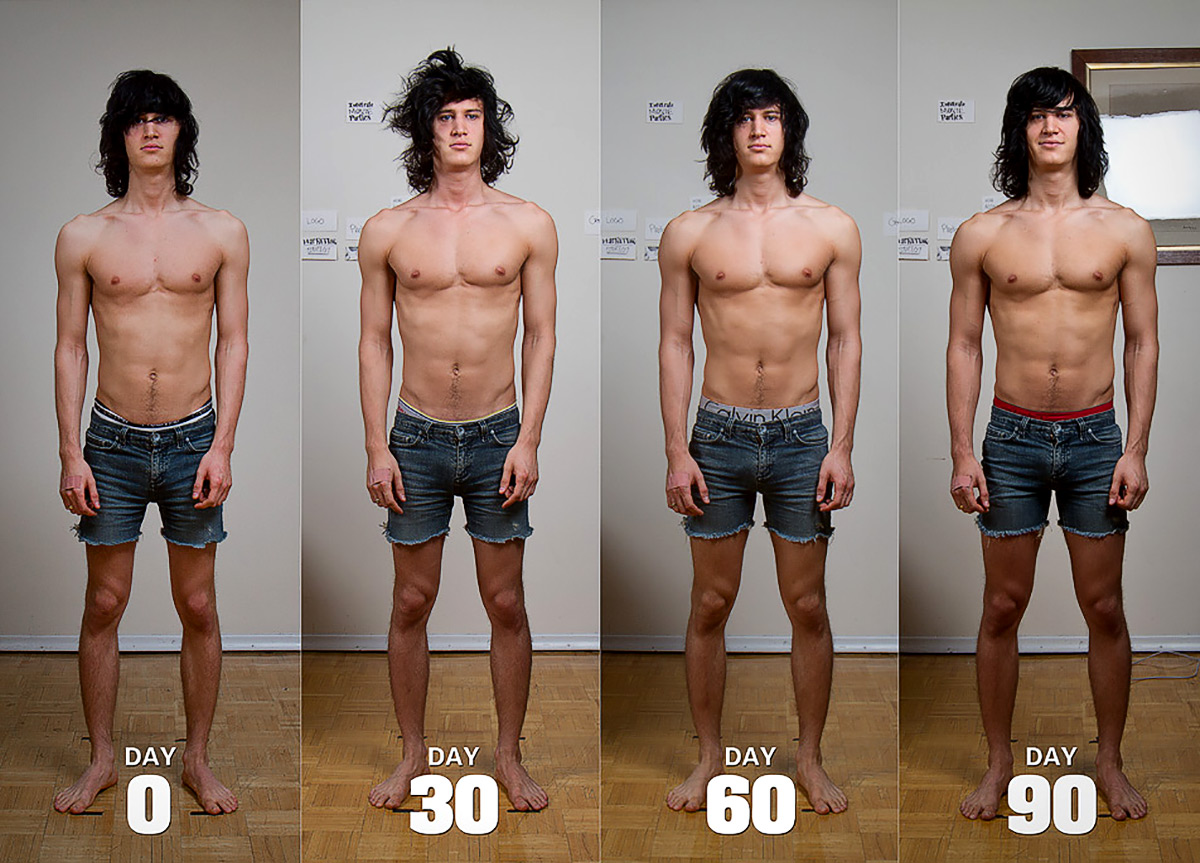
Those 25 pounds added five inches around my shoulders, one inch around my biceps, and just under an inch around my waist:
- Neck: 14.25″ to 15.5″
- Shoulders: 43.5″ to 48.25″
- Bicep: 12.25″ to 13.25″
- Chest: 37″ to 38.5″
- Waist: 30″ to 30.75″
- Hips: 36″ to 39″
- Thigh: 18.75″ to 21.5″
- Calf: 13.5″ to 14.25″
I didn’t need to cut. The small amount of fat I’d gained wasn’t bothering me, and it would have slowly melted away over the next few months anyway. That gave me a full bulking-and-cutting transformation that looked like this:

After four weeks of cutting, I lost almost two inches around my waist, finishing with a smaller waist than when I started, while keeping four extra inches around my shoulders and an extra inch of arm size. I kept all of the strength I’d gained, too.
Here are the measurement changes after four months:
- Body Weight: 150lbs to 167lbs (+17 pounds)
- Neck: 14.25″ to 14.5″ (+0.25 inches)
- Shoulders: 43.5″ to 47.5″ (+4 inches!)
- Bicep: 12.25″ to 13.25″ (+1 inch)
- Chest: 37″ to 38.25″ (+1.25 inches)
- Waist: 30″ to 29.25″ (-0.75 inches)
- Hips: 36″ to 37.25″ (+1.25 inches)
- Thigh: 18.75″ to 21″ (+2.25 inches)
- Calf: 13.5″ to 14″ (+0.5 inches)
Different workout programs emphasize different muscle groups, and some people are okay with gaining more fat, and everyone responds a bit differently to training… but this lines up fairly well with the kinds of results we see from guys following our bulking program.
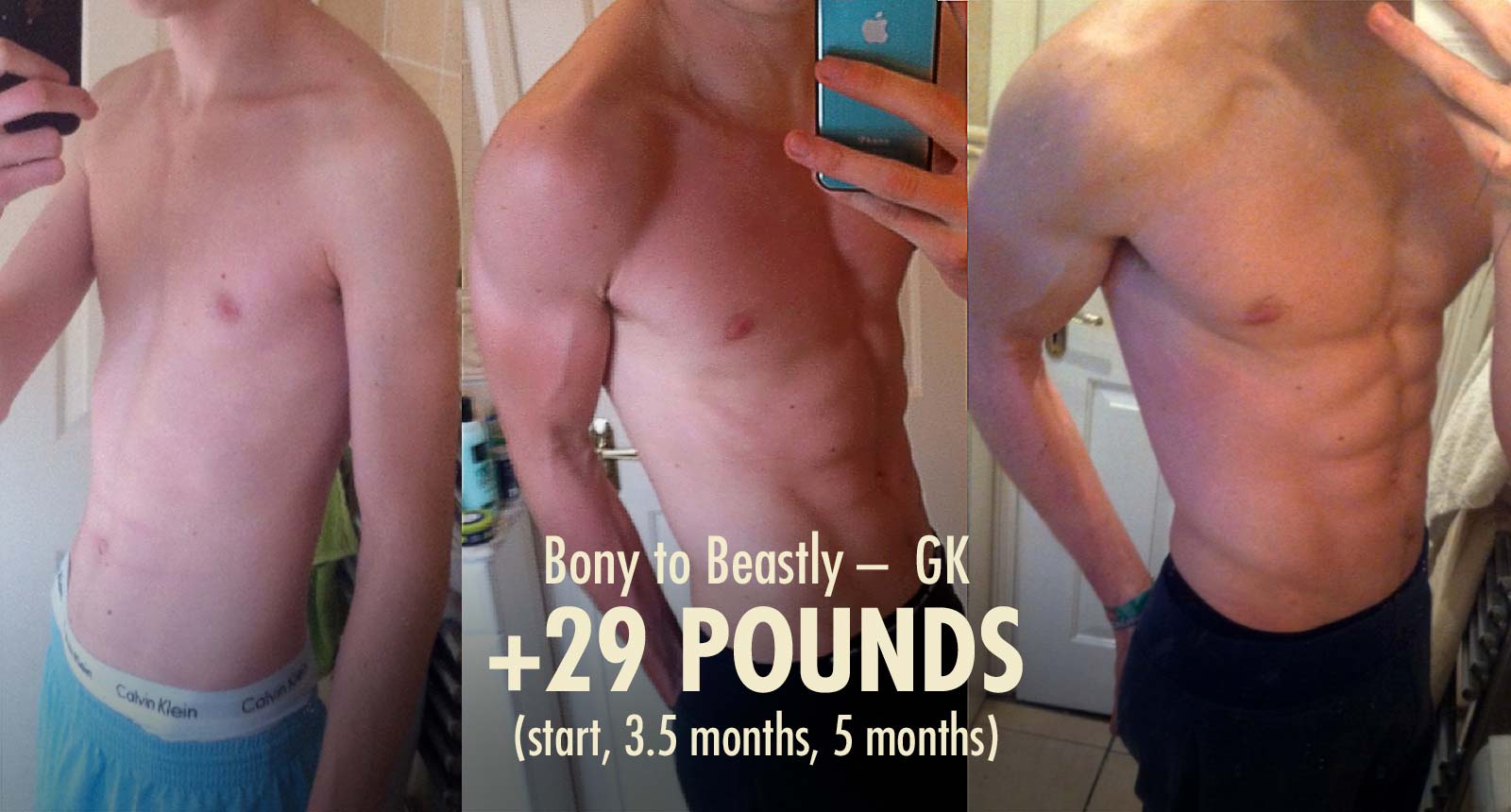
If we zoom out even further, I’ve gained a total of 70 pounds, which has added 3 inches to my waist, 6 inches to my arms, and 13 inches to my shoulder circumference. My waist is 31 inches right now, but it’s popped up as high as 34 inches at the end of some bulks. I don’t think it’s ever gotten bigger than that.
Summary
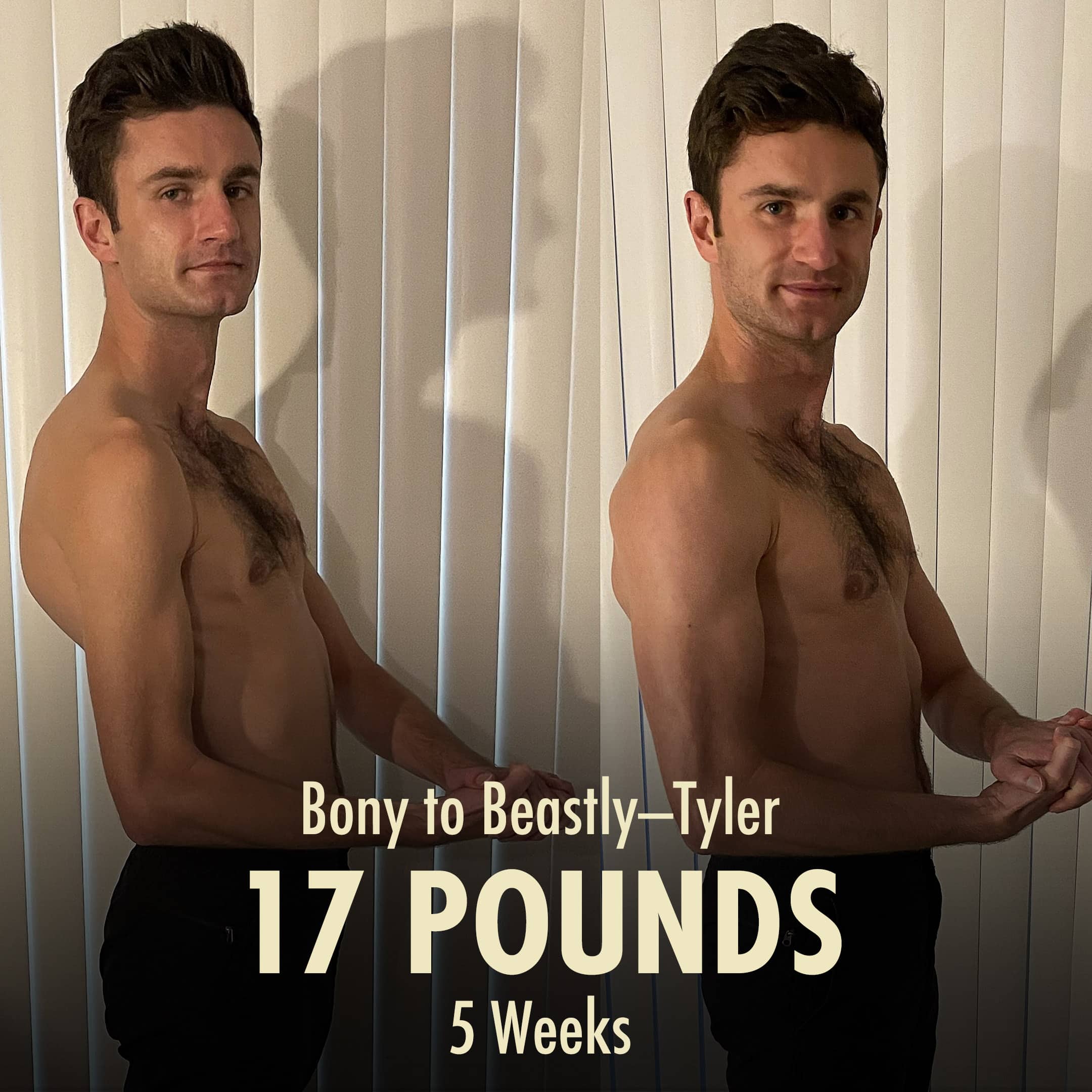
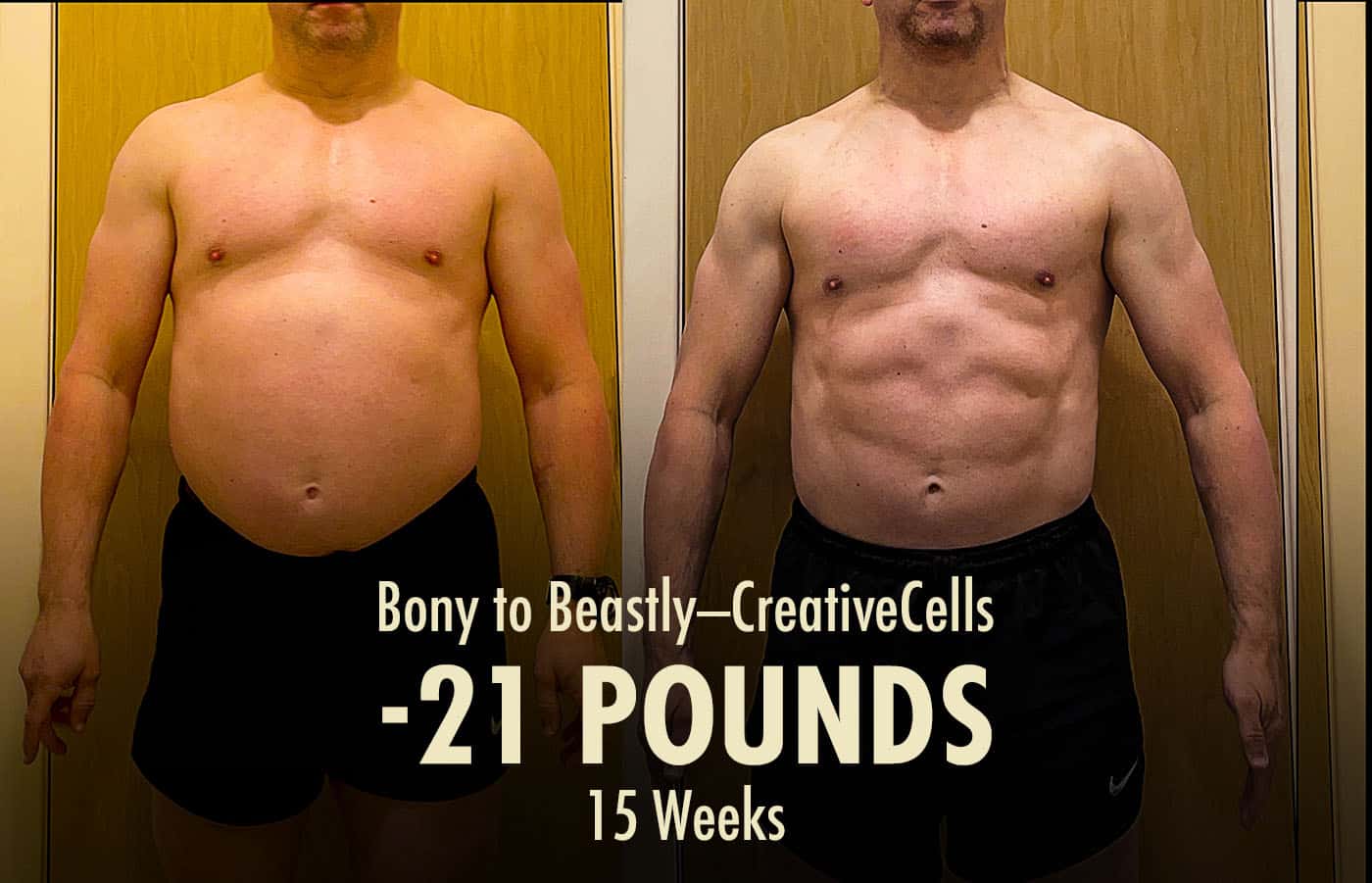
In our programs, we recommend tracking your strength gains each workout, weighing yourself each weekly, and taking measurements and photos every 5–15 weeks. That’s enough time for muscle growth to accumulate, and it’s not so much time that fat gain would get out of hand.
If you’re a beginner or intermediate doing our Bony to Beastly Program, changes can come fast, so I like to compare photos every five weeks:
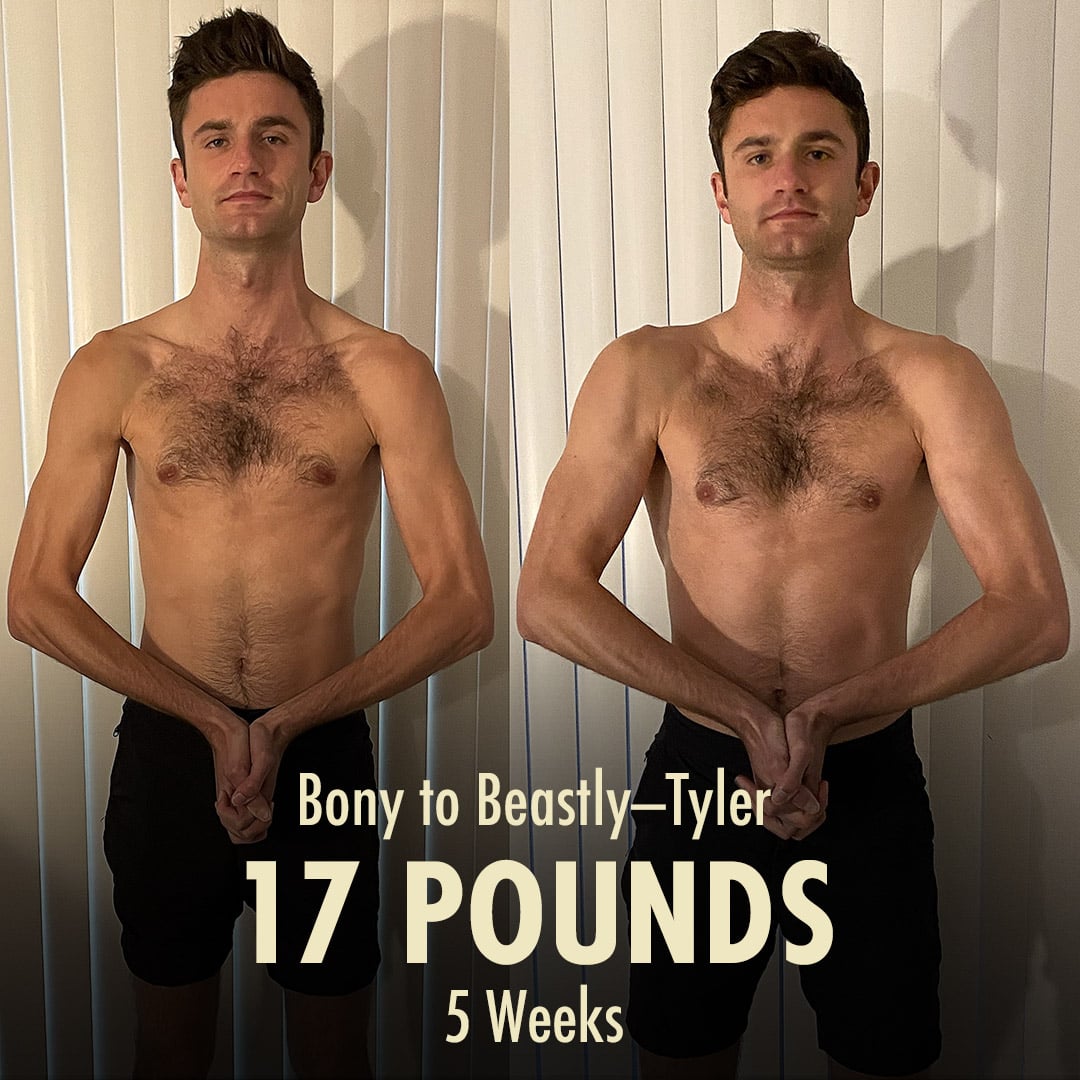
If you’re a more advanced lifter doing our Size and Strength Program or our Health and Aesthetics Program, I want to give results more time to accumulate. Fifteen weeks works better:
And then we have smaller check-ins every week. Some of those check-ins are quick and simple. Other times, we need to solve a problem or make a change.
If you want a full foundational bulking program, including a 5-month full-body workout routine, diet guide, recipe book, and online coaching, check out our Bony to Beastly Bulking Program:
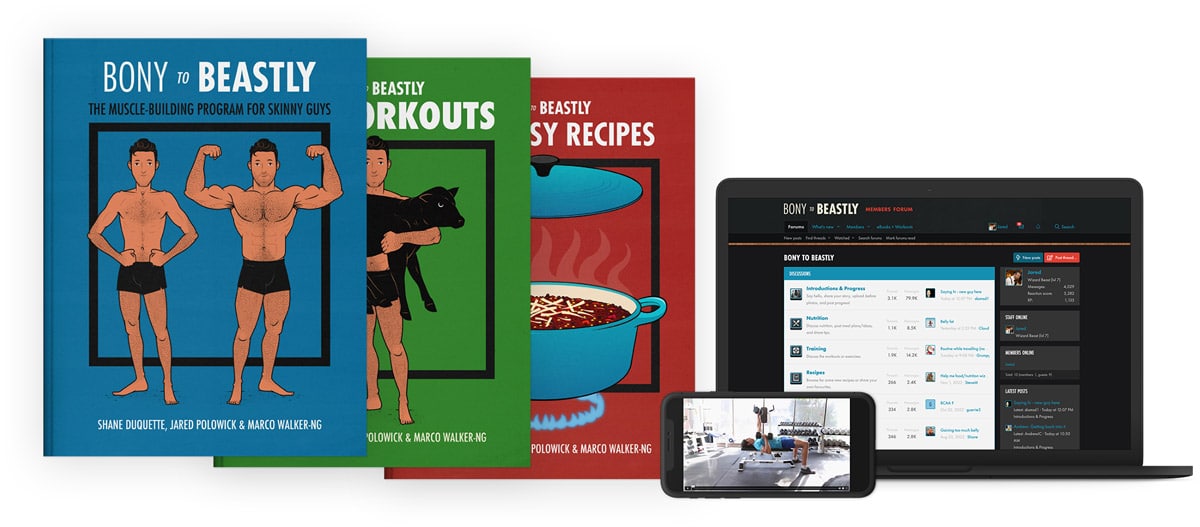
We’ll help you get started properly, help you track your progress, and give you feedback along the way. Your results are fully guaranteed.

Shane Duquette is the founder of Outlift, Bony to Beastly, and Bony to Bombshell, each with millions of readers. He's a Certified Conditioning Coach (CCC), has gained 70 pounds, and has over a decade of experience helping more than 15,000 people build muscle. He also has a degree in fine arts, but those are inversely correlated with muscle growth.
