
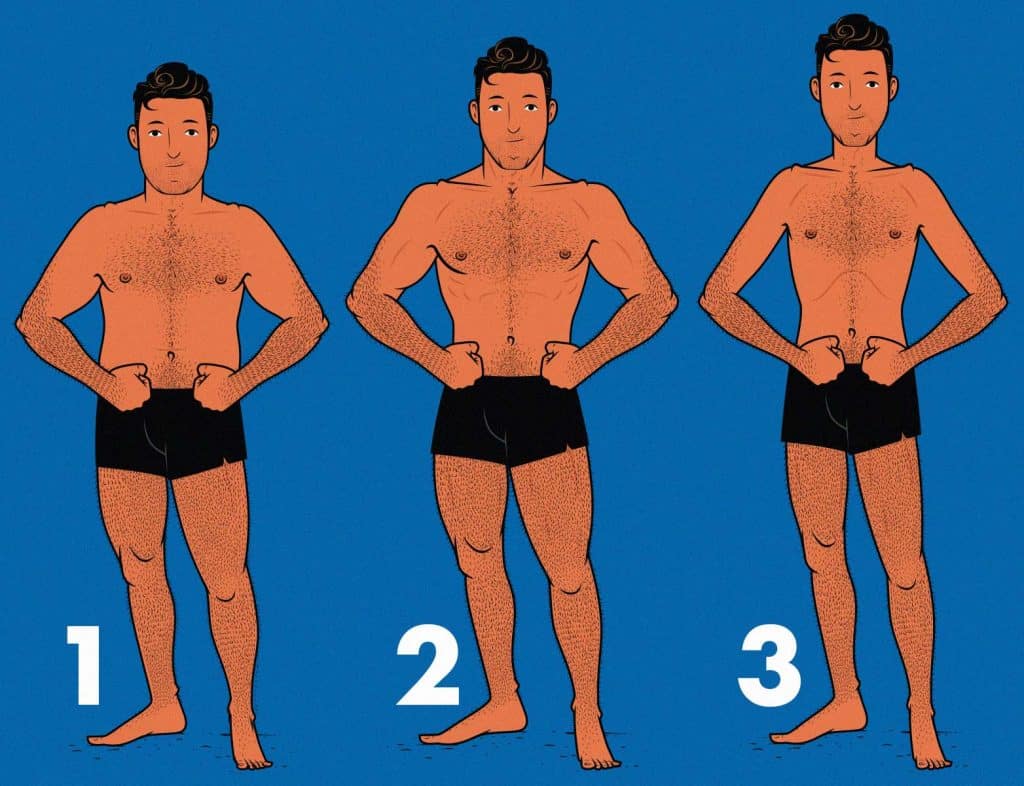
What’s More Attractive: Height or Muscle?
We often think of height as being attractive in and of itself. It’s common to think that height is attractive because it’s masculine, or because it makes guys stand out in a crowd, or because it signals good genetics. That isn’t the best way to think about it.
Women’s preference for tall men was formed back in the primordial crucible, back when strength was the difference between life and death. Stronger men were able to muscle their way into positions of leadership, claim more resources, and offer better protection to their loved ones. That’s the main reason height is attractive—because it gives a hint at a man’s physical capability.
If that’s true, it raises an interesting question: is it more important to be strong or tall?
Also, is it even true? The blackpill looksmaxxers have a different theory.
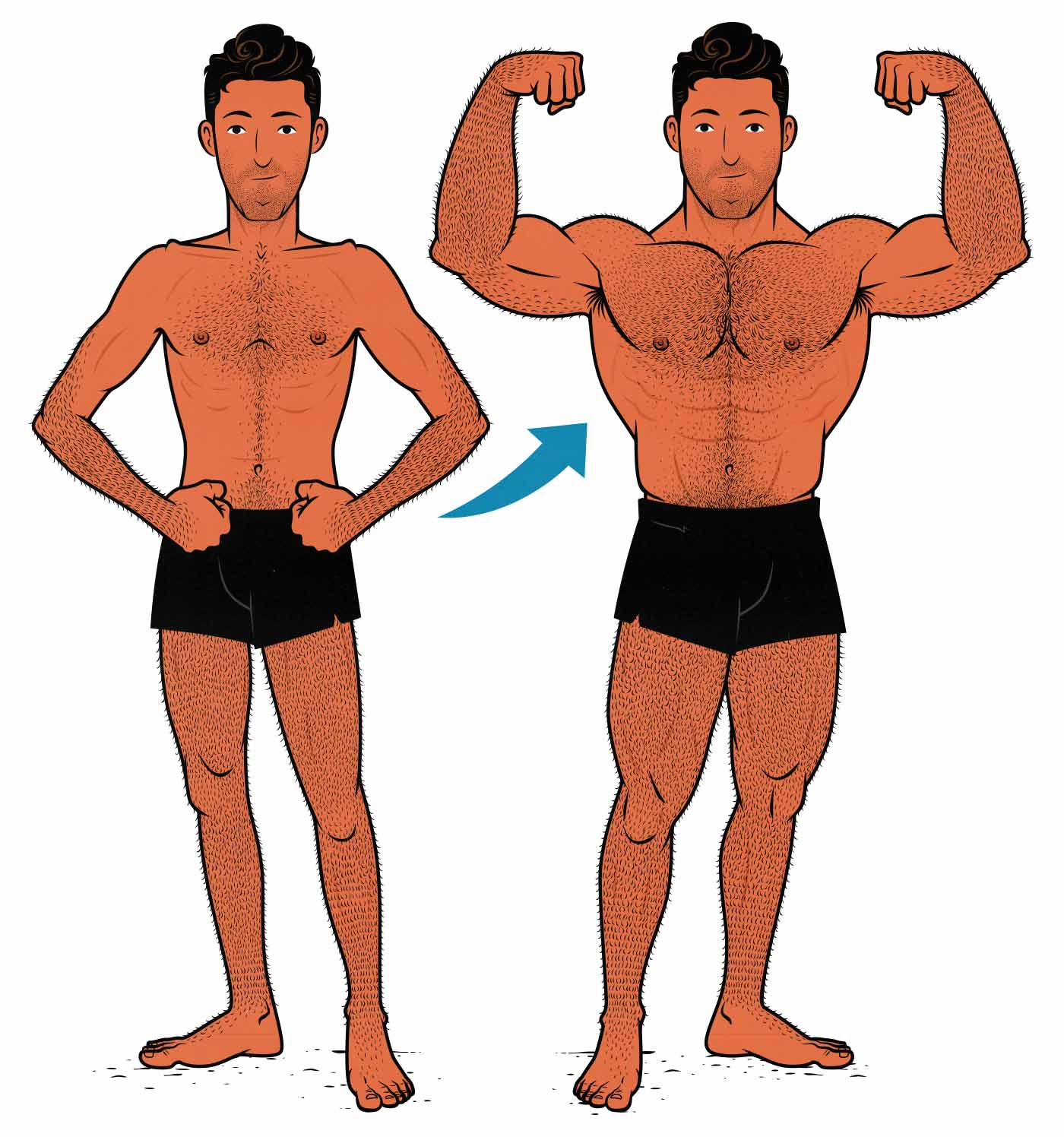
The Root of Attraction
To research this article, I started by speaking with Dr. Aaron Sell, a researcher with a PhD from the University of California, Santa Barbara. He’s got some of the most interesting studies about how height, strength, and muscularity affect attractiveness, including one of my favourite studies of all time.
When I started asking about height, Dr. Sell put me in touch with Dr. David Frederick, a researcher from Chapman University. He’s got one of the largest studies looking at how height affects attractiveness.
I’ll go through both of their research, but let’s start at the beginning.
Dr. David Buss is the most prominent attractiveness researcher, and he argues that women are looking for men who (study):
- Are able to invest
- Are able to protect
- Are willing to invest
- Are willing to protect
- Will make a good father
- Will make a compatible partner
- Are Healthy
Height and muscularity both play into three of those.
Health & Resources
Height is a rough proxy for health and resources. Your genetics determine how tall you can grow, but you won’t reach your genetic height unless you have a healthy childhood with steady access to an abundance of healthy food.
The same is true with strength, except that strength is a more direct signal. Being strong, fit, and athletic shows that you’re healthy and have access to ample food. And it isn’t just hinting at your childhood. You still have it. You’re thriving right now.
Ability to Protect
Height weakly hints at formidability. Taller guys are often bigger and heavier, and they almost always have greater reach. That gives them an advantage in fights.
Strength is a much stronger sign of formidability. According to one of Dr. Sell’s studies, strength signals formidability something like two to four times more strongly than height (study).
Here’s a quote from the study: “It is often assumed that fighting ability, and judgements of fighting ability, are primarily a function of body size. Our findings indicate otherwise. Men’s upper-body lifting strength robustly predicted their perceived strength and fighting ability, even when controlling for their body size and age; when pitted against each other, measured strength always predicted ratings of men’s strength and fighting ability better than height, weight and age did when the body was visible, and it was usually the strongest predictor even when raters could see only the face.”
That last point is particularly interesting. Even when a woman can only see a man’s face, she can still tell how much weight he can lift. That might sound strange, but here’s a before-and-after photo of someone who did a couple of our programs:
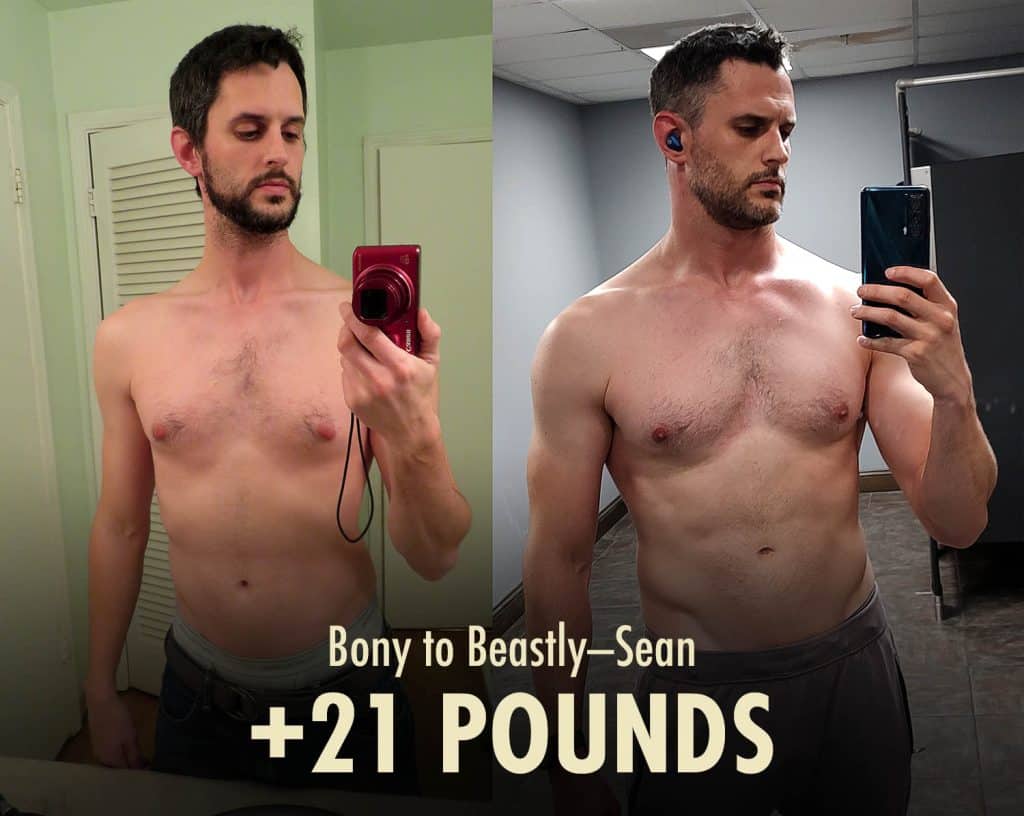
The change to his body is amazing, but even if you look just at his head, you can still see all of the strength he’s gained.
Here’s another example. This is a photo of me at 17 years old. My body is completely covered, but you can probably get a good feel for how strong I am:

And that brings up an interesting exception. When I first started building muscle, I didn’t think to train my neck. Here’s a before and after photo showing the difference a couple of inches of neck size made to the “strength” of my face:

In both photos, I weighed 190 pounds and was deadlifting 405 pounds for 8 reps. The only difference is that I bulked up my neck from 14 inches to 16 inches.
You can see the difference even more clearly here:

My point is, if you do it properly, getting into good shape improves both your facial and bodily attractiveness ratings. It gets counted twice.
Survey Results
Dr. Sell found that strength and muscularity accounted for approximately 70% of the variance in men’s bodily attractiveness (study). Height only accounted for about 10% of the variance in bodily attractiveness. The catch is that taller men are often stronger.
To test that idea myself, I drew three men, identical but for their height, body fat, and muscularity:
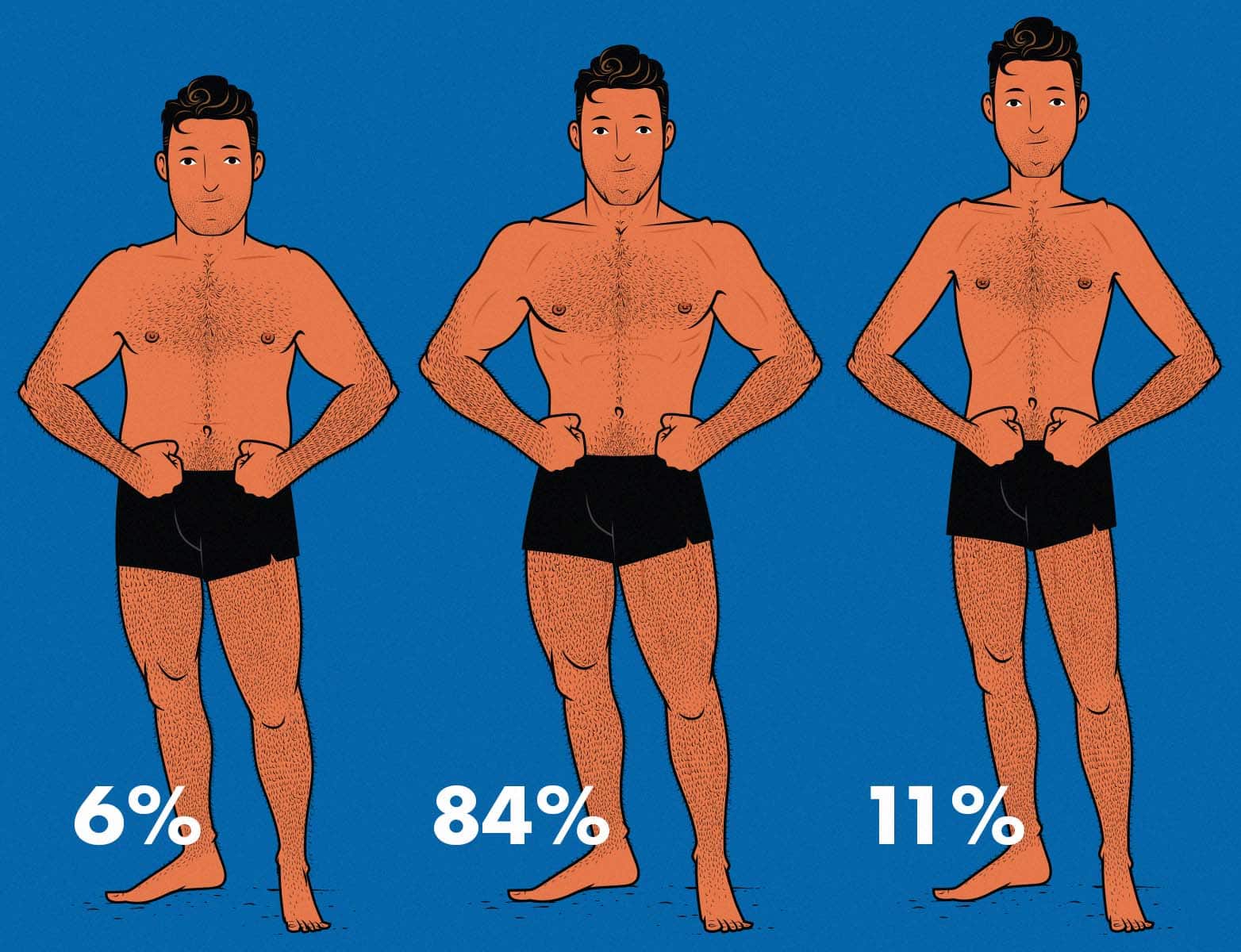
84% of women chose the muscular man over the tall man. This supports the idea that women value physical capability more than height.
Speed Dating Studies
One of the best ways to see what women prefer in the real world is to look at speed dating data. It’s one of the only ways to see who women choose to date in real life. For example, in this study, the researchers analyzed the data from 11,000 people who signed up to go on real dates using a real speed-dating service called HurryDate.
Here’s what that looks like:

25 men and 25 women would show up for each event. At the beginning of those events, they would spend a bit of time milling around and chatting, making it obvious how the men measured up against each other. And then the men and women would pair off, with every woman going on a 3-minute date with every man, marking down which suitors she wanted to go on second dates with.
The three traits that gave men the highest chance of getting a second date were:
- Facial attractiveness
- Bodily attractiveness
- Height
All three most attractive traits were physical, but they only accounted for 18% of the variance, leaving 82% coming from a slew of other factors. One of the more important factors was the desire to have children. Another was having what women considered to be a “good personality.” Keep in mind, though, that a woman’s idea of a good personality might not be what you think it is. The same thing goes for the face and the body. Women aren’t looking for quite the same things as men are. I covered that in this article about the ideal male physique.
There’s another interesting bit of data here, too (study). The women filled out a questionnaire before the speed-dating event. Most said they preferred men above a certain height, but when it came time to choose whom to go on a second date with, they chose 32% of men who met their height requirement and 25% of men who were too short.
When a woman’s stated preference (e.g. “I prefer tall guys”) doesn’t line up with their revealed preference (e.g. they get caught dating a short guy), it can seem like there must be some trickery going on. But women usually do prefer tallness, or at least what that tallness signals. And that preference did show up. They were 7% more likely to choose a man they thought was tall enough. It’s just that their preference for height isn’t a particularly strong preference. Most women make their decisions based on factors that matter much more.
It’s very common to see this playing out in real life. A woman will set her height filter to 5’10 on a dating app, but then she’ll wind up marrying the 5’6 guy she met in her economics 101 class.
Number of Sexual Partners
But we’ve been looking at this from the female side—at who women choose to date. Let’s look at it from the male perspective, at how height affects a man’s romantic life. For example, how many women he’s slept with, or his chance of being single. To figure that out, Dr. Frederick surveyed 60,000 Americans, asking them about their sexual and romantic success (study).
How height affects a man’s number of sexual partners:
- Very Short Guys (5’2″–5’4″): 9 partners
- Short Guys (5’5″–5’7″): 11 partners
- Average (5’8″–5’10”): 12 partners
- Tall Guys (5’11″–6’1″): 12 partners
- Very Tall Guys (>6’1): 12 partners
How thinness affects a man’s number of sexual partners:
- Underweight Guys (<18.5): 8 partners
- Normal Weight Guys (18.5–25): 11 partners
- Overweight Guys (25–30): 13 partners
- Obese Guys (30–40 BMI): 12 partners
- Morbidly Obese Guys (40+ BMI): 9 partners
These findings line up with the overall body of evidence. In this meta-analysis of 91 studies with a total of over 150,000 participants, taller men fared slightly better, but having a deep voice was slightly more important, and being strong was way more important. Muscularity was over twice as strongly correlated with sexual partners as height.
But trying to gauge attractiveness by looking at sexual partners is a mess for all sorts of reasons, as I explained in this YouTube video. For example, when I surveyed 500 men myself, guys with creative hobbies had twice as many sexual partners as the average man, while also being dramatically less happy with their love lives. It’s better to look at other metrics.
Chance of Being Single
If we go back to Dr. Fredericks study, we can look at how height affects a man’s likelihood of being single:
- Very Short Guys (5’2″–5’4″): 14% were single.
- Short Guys (5’5″–5’7″): 10% were single.
- Average (5’8″–5’10”): 9% were single.
- Tall Guys (5’11″–6’1″): 8% were single.
- Very Tall Guys (>6’1): 8% were single.
If you flip that around, it looks like 86% of very short guys are romantically involved with someone, compared with 92% of very tall guys. That’s a significant difference.
We can also look at how a man’s weight affects his chance of being single:
- Underweight (<18.5): 20% are single
- Low Healthy (18.5–20.9): 21% are single
- Mid Healthy (21–22.9): 15% are single
- Upper Healthy (23–24.9): 10% are single
- Low Overweight (25–27.5): 8% are single
- Upper Overweight (27.5–29.9): 6% are single
- Lower Obese (30–34.9): 6% are single
- Upper Obese (35–40): 8% are single
- Morbidly Obese (>40): 10% are single
I know it might seem weird that overweight guys fared the best, but heavier guys are more likely to be strong, and women put an enormous premium on strength.
Being overweight doesn’t mean you’re fat, either. Here’s me gaining 70 pounds, going from an underweight BMI of 17 up to an overweight BMI of 26:
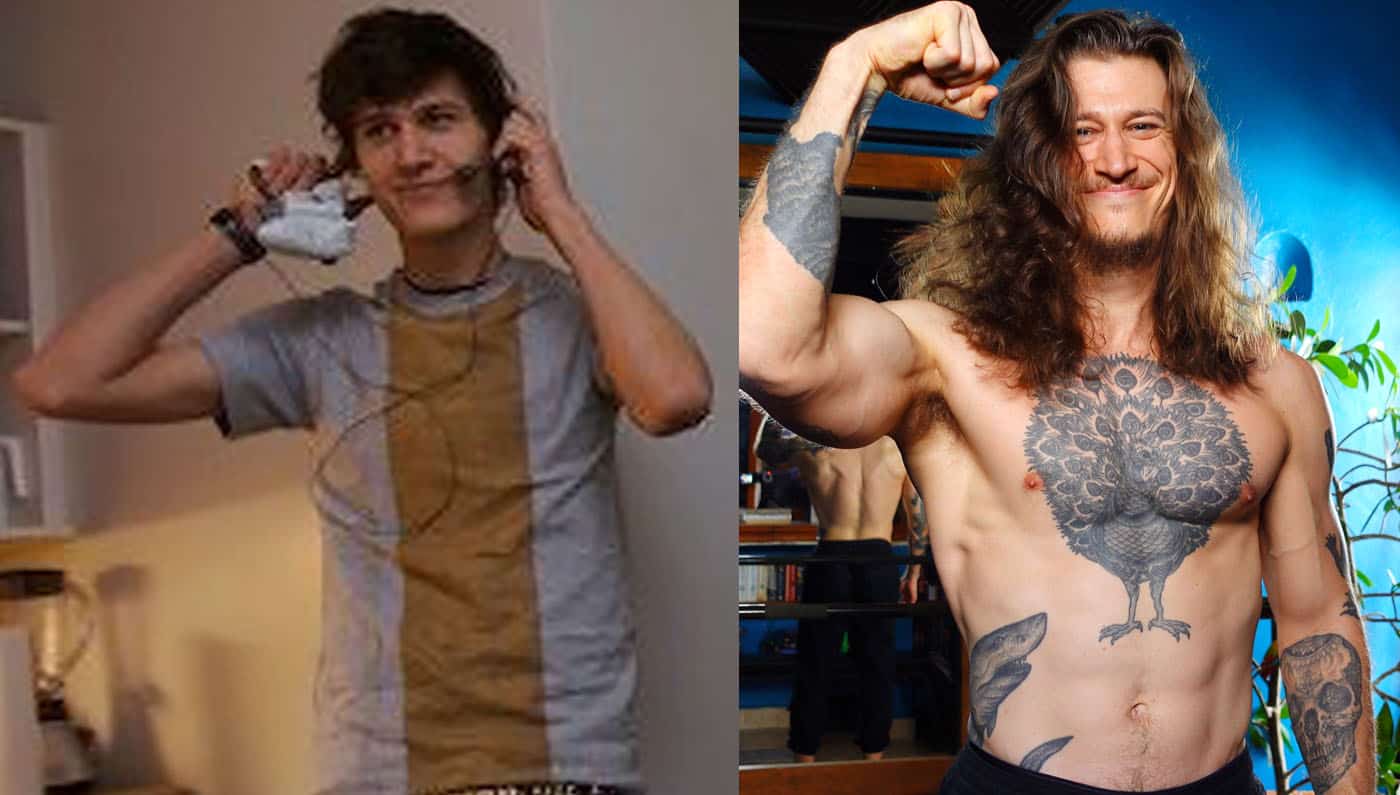
Being overweight can mean you’re fat, though, and maybe part of what we’re seeing is that when guys get into relationships, they stop being so diligent about keeping lean. Maybe it’s being in a relationship that’s causing the weight gain, not the weight gain causing the relationship.
I wouldn’t read too much into the BMI findings. I suspect that if you’re thin in a strong and healthy way, you’d do better than someone who’s overweight in a weak and unhealthy way.
But, if we take the data as it is, then you’re the most likely to be single if you’re a weak man, the second most likely to be single if you’re a very obese woman, and the third most likely to be single if you’re a very short man. But consider the percentages. Skinniness is the greatest disadvantage, and yet 80% of skinny guys are in some sort of romance.
Marriage, Divorce, and Cheating
There are also a few studies looking at marriage rates, and the same pattern shows up again: the very shortest guys do slightly worse (study, study).
If we look at divorce rates, I could only find one study, and it found that shorter guys were less likely to get divorced, but I wouldn’t read too much into just that one study. If I had to guess, I’d guess that by the time you’ve settled down with a woman who’s cool with your height, it doesn’t really matter anymore.
Height doesn’t seem to affect the likelihood of being cheated on, either (study).
The Blackpill Height Argument
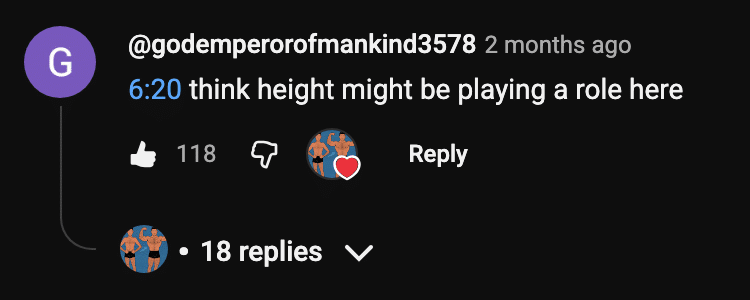
There’s this blackpill/looksmaxxing idea that when you’re short, building muscle turns you into a “gymcel.” For example, when I made a YouTube video criticizing Jeff Nippard’s idea that looking steroidy is better, I got dozens of comments saying that Jeff Nippard was too short for his muscles to matter:
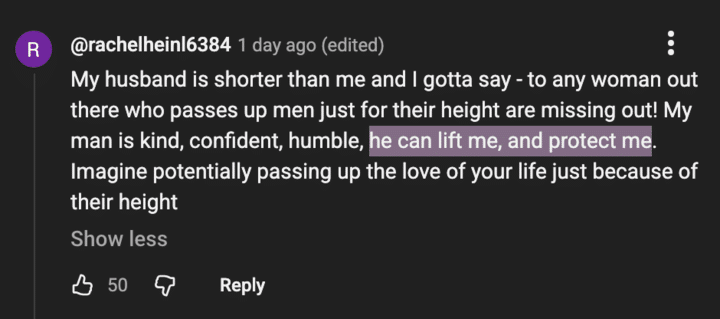
In reality, most women care far more about what a man’s body can do, not how tall it is. They want a man who’s strong and can do things. If you’re tall, great, but what really matters is being physically capable:
Gymcels are a real phenomenon, but it doesn’t come from being short; it comes from taking steroids. When I surveyed women, 79% said they wouldn’t date a guy who took steroids, 20% said it was a red flag, and less than 1% preferred it. More on that here.
The gymcel vibe is one of obsession. It’s when a man gets so fixated on muscle that he’s willing to sacrifice everything to gain more of it. But women prefer men who are physically and psychologically healthy. If insecurity or obsession drives a man to take drugs, it shows that he’s failing on both fronts.
Steroids are gaining popularity in the blackpill community, especially with the rise of looksmaxxing influencers like Clavicular and Road to 1%. The idea is that steroids make you more masculine, more dominant, and more attractive. The argument is that even if women say they don’t like guys who take steroids, they still choose guys on steroids. But when I surveyed 500 men, the guys who took steroids were doing significantly worse with women than the natural lifters:
- Natural lifters: 30% said they were better than average at dating, and 66% said they were happy with their love lives.
- Steroid lifters: 8% said they were better than average at dating, and 46% said they were happy with their love lives.
So it’s possible to become so muscular that it hurts your love life, but that’s because most women are turned off by drug abuse. That’s true for both short and tall guys.
Conclusion
Women do prefer tall men. It’s a consistent finding across every single line of research. Almost every single study shows that when a guy is more than 3 inches shorter than average, he has a slightly harder time dating, and he’s slightly less likely to get married.
I tested it myself, surveying 500 men, and then cross-referencing their height against their self-reported dating success. 55% of short men reported being happy with their romantic lives. 66% of men who were average and tall reported being happy with their romantic lives. Very tall guys were the most likely to be happy (71%). That’s a real disadvantage, and I don’t want to downplay it. It especially sucks because there’s nothing you can do to change your height.
However, height is just one part of your physique, and it isn’t nearly as important as being strong, fit, and physically capable. Whatever height you are, your strength is a much better predictor of your bodily attractiveness than your height. If a short guy gets into better shape than average, he’ll have a more attractive body than average.
The catch is that you need to be strong compared to the average man. You wouldn’t want a big bench press for your body weight; you’d want a big bench press compared to the average man.
If you find this stuff interesting, check out our article about how to build an aesthetic physique.

Shane Duquette is the founder of Outlift, Bony to Beastly, and Bony to Bombshell, each with millions of readers. He's a Certified Conditioning Coach (CCC), has gained 70 pounds, and has over a decade of experience helping more than 15,000 people build muscle. He also has a degree in fine arts, but those are inversely correlated with muscle growth.
Muscle-Building Mini-Course via Email
Sign up for our 5-part muscle-building mini-course that covers everything you need to know about:
Here are some related articles