

How Fatiguing is Lifting Weights? Is It Normal to Feel Tired?
The other day, I got an email from someone following one of the workout routines in our Outlift Program, saying it was making him feel fatigued. He was asking if there was a way to make it less fatiguing. I think he was noticing something real, and I responded with some advice about how to fix it. When I first started lifting, I ran into the same problems, and I had the same questions. I thought you might, too.
Fatigue is tricky. To make progress, you need to challenge yourself, and challenging yourself is tiring. That’s why, generally speaking, the harder someone works, and the more fatigued it makes their muscles, the more gains they tend to make (full article). That’s muscular fatigue, though. That isn’t quite the same as overall fatigue.
When we look at overall fatigue, the research very clearly shows that good lifting programs tend to dramatically reduce fatigue. That may seem weird, but it will make sense by the end.
Let’s start with a quick overview of the research.
I’ll tell you the advice I gave at the end, along with some practical recommendations.
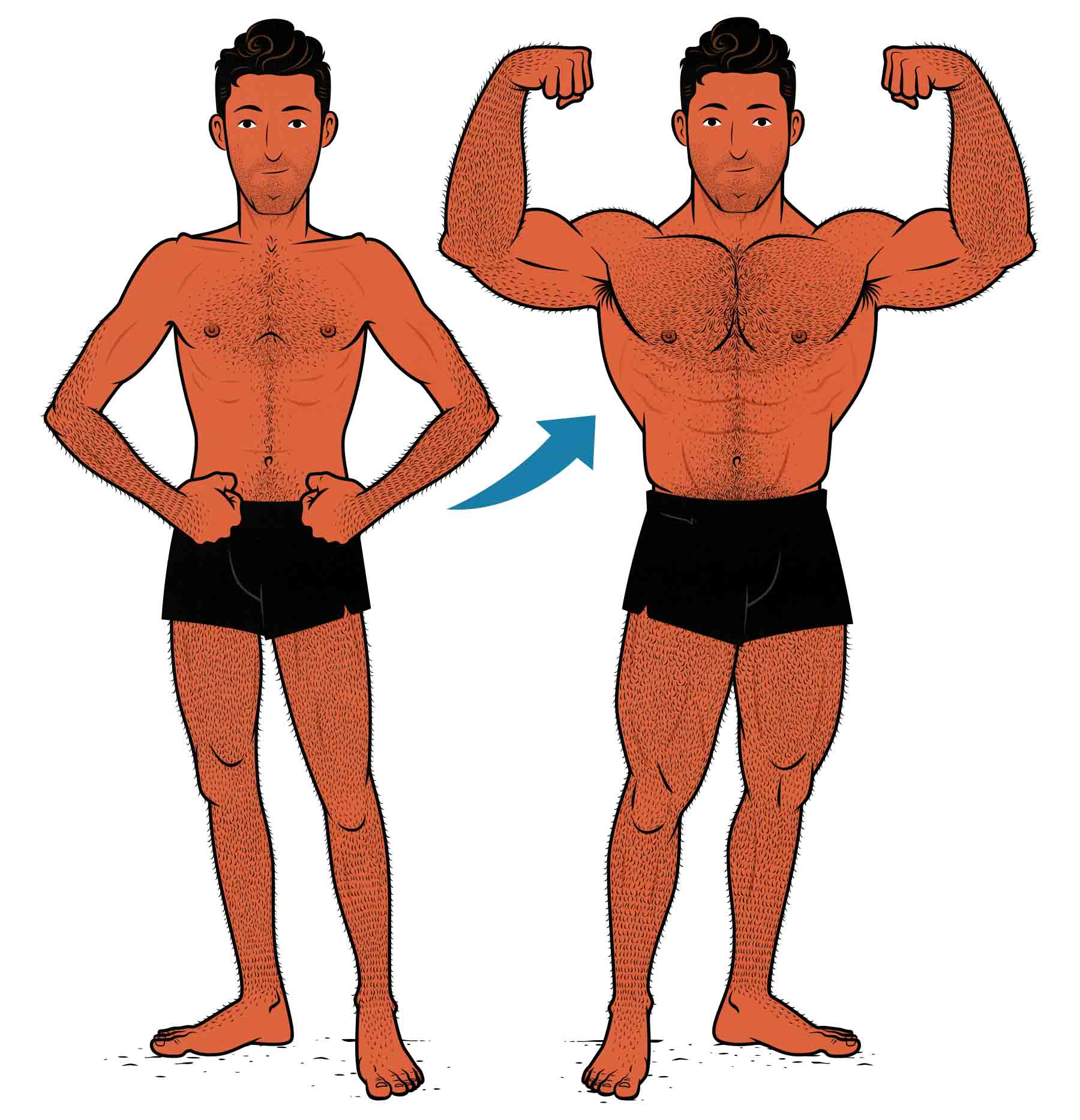
How Cardio Affects Energy
In a study by Puetz, the researchers start by going through the previous research, explaining that when someone is fatigued because of a chronic illness, exercise helps, and the evidence is overwhelming (meta, meta). The invigorating effects of exercise are apparently more powerful than therapy and drugs, too (meta). The trouble is, if you’re already feeling fatigued, where are you supposed to find the energy to start?
This study was about something different, though. They wanted to know how exercise affected regular, healthy people with low energy levels. So, they rounded up 36 people who reported feeling tired in a general sort of way, and split them into three groups:
- No exercise.
- 20 minutes of easy cycling 3x per week.
- 20 minutes of intense cycling 3x per week.
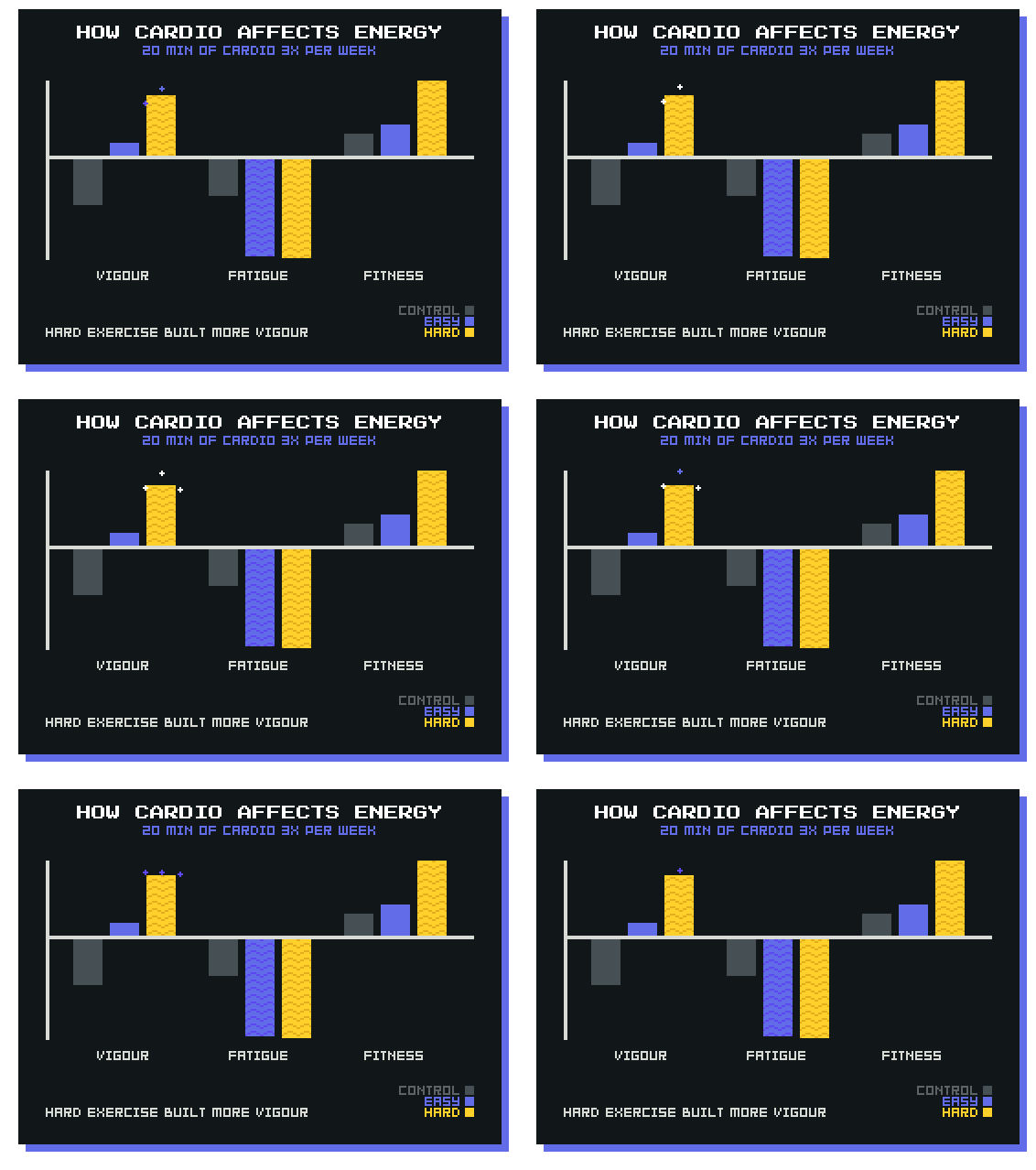
Both intensities of exercise reduced fatigue, but the more intense cardio routine did a way better job of building fitness and vigour. The participants reported feeling more vigorous after the first workout, and their energy kept building as the study went on.
That’s vigour, though. Fatigue is something slightly different. You can be vigorous and fatigued at the same time. For example:
- High vigour, high fatigue: You had a hard workout a couple of days ago, and your muscles are sore, but you’re excited to get back to the gym so you can stimulate a new wave of progress.
- Low vigour, low fatigue: You haven’t been exercising recently. Your muscles aren’t sore. But you don’t have much energy for things.
Most people love the feeling of high vigour and high fatigue. It feels like you’re living fully. When you have an opportunity, you give it your all, spend all your energy, and go to bed tired, knowing you did your best. You get a nice ebb and flow of energy. And because you’re stressing your energy and recovery systems, you adapt, and your battery grows bigger.
Most people hate having low energy and low fatigue. It can feel like wasted potential. Sitting on the couch doom scrolling feels awful when you have that niggling feeling that you ought to be doing something more. It can be an anxious, regretful sort of rest.
This study is on the chiller side. Doing 20 minutes of cardio 3x per week is super reasonable for a beginner. The participants weren’t getting very fatigued.
The gains in vigour probably weren’t as big as they could be, either, though.
Lifting Seems to Be Even More Powerful
If we zoom out and look at the research overall, we get this meta-analysis by Wender. The researchers looked at 81 randomly controlled trials with a total of 7,050 participants to see how cardio and lifting affected energy levels.
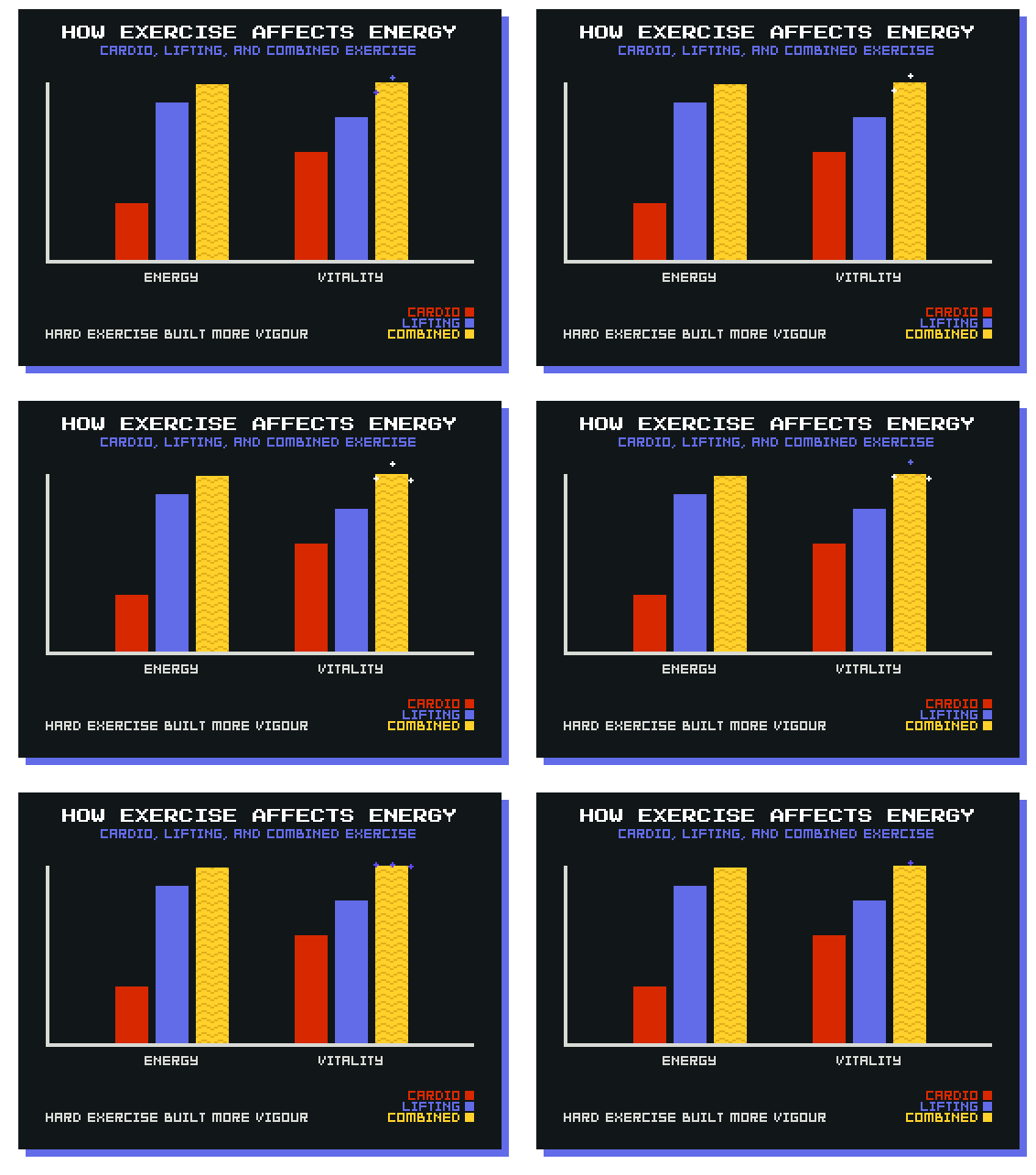
The researchers used vitality as their main metric, which is how much energy you have compared to how fatigued you feel. What we’re seeing, then, is that both cardio and lifting improve vitality, but that lifting has a much stronger effect, and doing both is slightly better.
The longer a study was, the more energy the participants finished with. Even in studies lasting nearly a full year, the participants weren’t accumulating fatigue, they were accumulating vitality.
Exercise gave everyone more vitality, male and female, sick and healthy. Some of the participants had chronic fatigue, heart disease, digestive issues, or were recovering from cancer. Doing an appropriate amount of exercise always seemed to help.
Why Does Lifting Feel Fatiguing?
This research is a strange. Almost everyone who’s done a hard workout program knows what it’s like to push their limits, spend all their energy, feel tired and sore, and have less energy for the other things in their lives.
When I first started lifting, I jumped right into a brutal program, and it melted me down into a puddle. I had a brand new job at an advertising agency, working on the illustration team. I would pour myself onto my office chair and then ooze right off.
I wasn’t exactly “fatigued,” though. I was stiff and sore and tired… but also hungry to get back to the gym, excited to do another workout, and eager to stimulate more muscle growth. And I made the best gains of my life.
More than one thing is going on at the same time:
- Sore, tired muscles aren’t the same as fatigue. When you first start lifting weights, or if you step up the intensity of your routine, you can get quite sore and stiff. That doesn’t mean you’re fatigued overall. You’ll quickly grow tougher, too—usually within a couple of weeks. More on that here.
- Having tired muscles can feel like being tired. If you blast your spinal erectors with an especially hard deadlift session, your spine is growing stronger, and your body is growing more vigorous, and your brain is working better than ever… but it might still be hard to sit up straight in your office chair.
- Your body might ask for rest. If you go on an especially long run, your health is improving, your brain is more capable than ever, and you might feel perfectly lucid, but you’ve spent a bunch of energy, and you might be in the mood to lie down and relax. If you still have a long day of work ahead of you, that can be a problem.
- Exercise uses willpower. If you force yourself to do a hard workout first thing in the morning, you’re drawing from the same well of willpower you use to do hard tasks at work. That “mental fatigue” usually clears up within an hour or two, and once exercising becomes a habit, it doesn’t use nearly as much willpower to begin with. But it takes a couple of months for exercise to become a habit. That’s why there are so many successful people raving about how they get so much more work done after doing a morning workout, but then when people try it, they feel drained, and they get less work done.
- How do you start? It’s all well and good that exercise is energizing, but if you’re low in energy, then how do you find the energy to start?
And so, if you dive headfirst into a challenging new exercise routine, you might find yourself burning through tons of willpower, feeling sore, and crashing on the couch whenever you have a free moment. You may even want to take a nap. Or find yourself sleeping an hour longer at night.
None of that is “bad.” You’re working hard, adapting, and improving. It’s amazing for your body and brain, both now and forever.
But if your workout routine is making it hard to do all the other things you need to do, that can be a big problem.
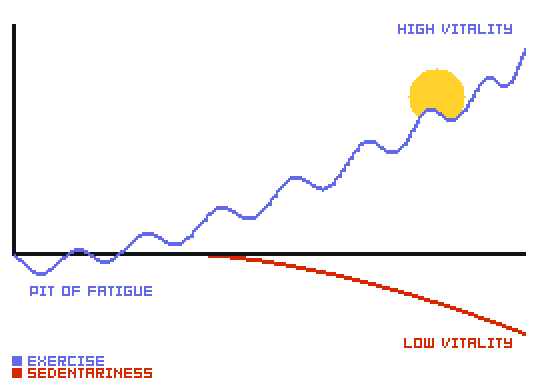
In my own experience, and when talking with other coaches, and when working with clients, when someone starts a challenging new workout routine, it takes them about 3 months to feel like they have more energy than when they started.
How to Make Lifting Less Fatiguing
There’s another way, though. If you do too much too soon, you can cause excessive muscle damage, get needlessly fatigued, and maybe even pick up an overuse injury.
None of those things are dangerous in the long term, but all of it can make the beginning way rougher than it needs to be, and it may even slow down your results. Resources spent on needless repairs are resources that could have been spent on renovations.
So, instead of diving into a new exercise routine, wade in:
- Start with lifting. Lifting seems to be quite a bit better than cardio for improving vigour, at least at first. Plus, if you haven’t been exercising at all, then lifting is already pretty good cardio. Cardio is amazing, and I highly recommend it, but it can wait a few months.
- Start with 2 sets per exercise. When you first start a new routine, your muscles are sensitive to the stimulus, so it doesn’t take much. You’ll grow tougher very quickly, though. So, every week, you can add more sets to some of your exercises. For instance, if you want bigger arms, work up to doing more sets of biceps curls. (Or stick with 2 sets. That’s usually still enough to make progress, just at a slower pace. Easier programs won’t give the same longterm gains in vitality, though.)
- Fatigue is usually local. Maybe your biceps are super sore and tired, and that’s nice, so no problem. But if your spinal erectors get too tired, then it’s harder to sit upright at your desk, and you might not be in the mood to carry anything at all. So, maybe instead of barbell deadlifts, you do some lighter Romanian deadlifts, maybe even one leg at a time.
- Lifting twice per week is enough to get the bulk of the health benefits, and it should noticeably improve your vitality. Lifting more often is significantly better for gaining muscle and strength, but it’s perfectly fine to cruise along at 2 lifting workouts per week.
- As a beginner, start with full-body workouts. You’ll get more stimulus, be able to practice each exercise more often, and build more vigour. You also won’t be blasting any one muscle too hard in any given workout, helping to keep local muscular fatigue low.
- As you get stronger, switch to a split routine. My favourite is an upper/lower/upper/lower/arms split. I do it at a pace of 2–4 workouts per week, depending on how busy my week is. You’re working fewer muscles per workout, which is much easier and more refreshing. You can also blast specific muscles pretty hard, which is exactly what keeps them growing as you get more advanced.
- If you’re sprinting for progress, push hard and give it your best effort. Investing more time and effort into training is one of the surest investments you could ever make. It always pays off. But pick the right time for it, and feel free to ease back afterwards.
- Maintenance is easy. When you accomplish your goal, you can ease back into maintenance, casually maintaining the progress you made. Lifting for 30–60 minutes twice per week isn’t usually enough to build a great physique, but it’s always enough to maintain one.
- Going on a morning walk is the most invigorating way to ease into cardio. Morning walks help wake you up, give you some modest fitness improvements, and help you sleep better at night. The boost in energy can be huge.
The Beginner Mistake
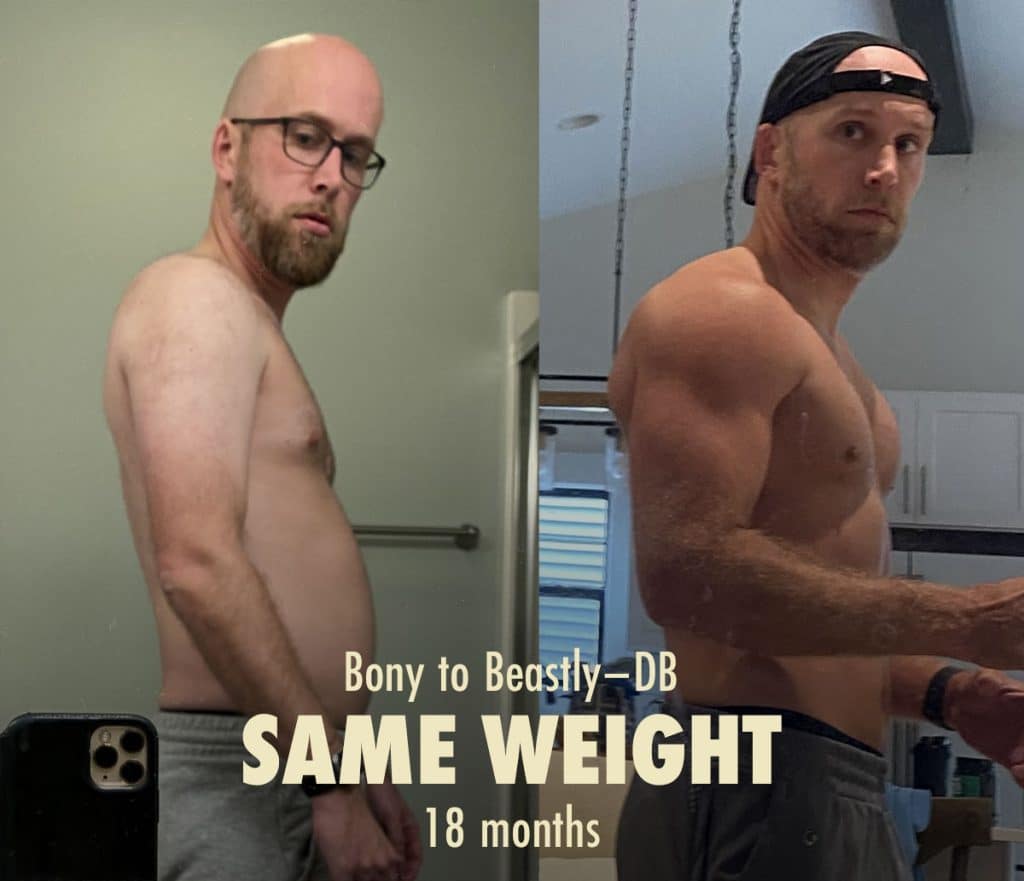
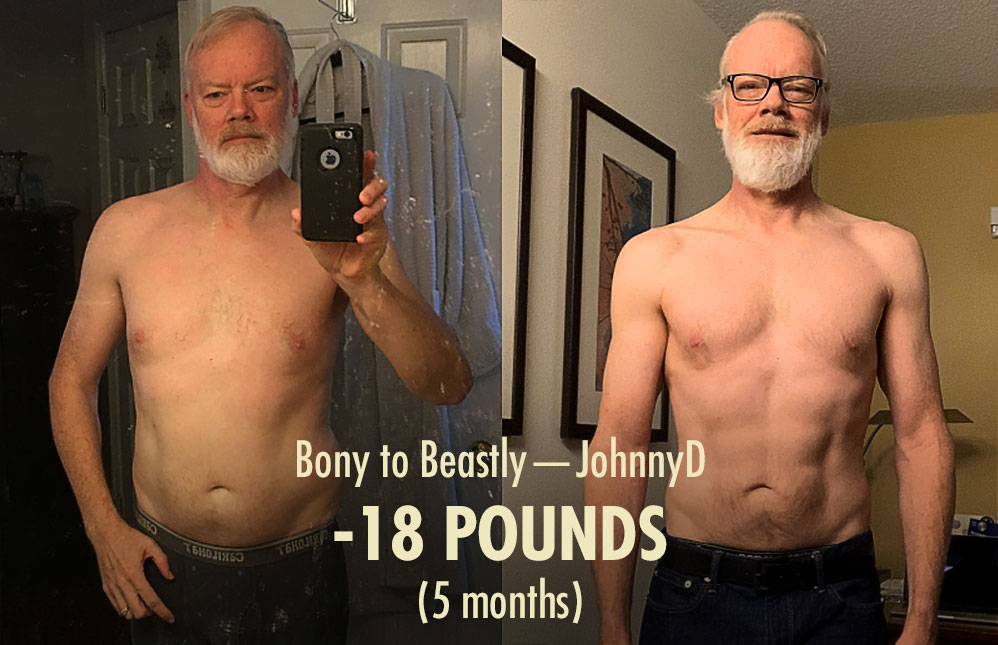
Our flagship Bony to Beastly Program is fairly challenging. It’s designed for people who aren’t in great shape yet, and who want to get there as quickly and effectively as possible. It’s great for beginners, early intermediates, and people who fell off the wagon.
It’s properly periodized, so we ease you into it over the course of a couple of weeks. It won’t hit you like a truck. But it’s a proper transformation program. That’s why guys are able to make such remarkable transformations with it.
You can use it for bulking, cutting, or recomping. We’ll help you figure out the best path.
The program comes with personal (human!) support from us. We take a look at where you’re starting, adjust things as needed, and give you feedback as you go through the program. If it’s too tiring, we’ll help you adjust it.
It’s counterintuitive: When you’re new to lifting, you aren’t as good at the exercises yet, and you don’t know how to fully use your muscles, and you haven’t pushed as deep into progressive overload. That means that after a couple weeks of easing in, beginners tend to be able to handle quite a lot!
If you stick with a beginner routine for too long, most people assume it’ll get too easy, but the opposite happens—it becomes too difficult. Once you’ve done a program like this for 5–8 months, it helps to switch to a more advanced one.
Going Beyond Newbie Gains
Our Outlift Program is for intermediate lifters who want to continue getting bigger and stronger, checking off the big strength milestones. It’s for guys who already know how to bench press, but who want to finally bench 225—for reps. It’s popular with guys who’ve been lifting for 1–5 years. It’s especially good if you’ve gotten your newbie gains, hit a plateau, and can’t figure out how to get your next wave of growth.
It comes with 3 different workout routines, with an easy and hard version of each. Counterintuitively, the routines with more days in them are the easier routines:
- 5-Day Routine: This is an Upper/Lower/Upper/Lower/Upper split. It gives your lower body everything it needs, and it has a nice emphasis on the upper body. The workload is spread out over 5 workout days, and you’re only training half your body each workout. The easy version of this routine feels pretty invigorating. You’ll probably leave the gym feeling pretty fresh.
- **4-Day Routine** This is the default version of the routine. The workouts are challenging and efficient without being overwhelming. It’s one of my favourite routines of all time, and it’s also the most popular one with our members.
- 3-Day Routine: This is the hardest routine. We’ve got a full week of lifting squished into 3 challenging workout days. The hard version of this routine is the hardest of all our routines. That’s the routine that was causing the fatigue issues I mentioned at the beginning of the newsletter.
Here’s my favourite trick: You don’t need to fit your workout routine into a standard week. If you want a more chill routine, you can do a 5-day routine at a pace of 2–3 workouts per week.
That way, the workload is being spread over more workout days, making each individual workout easier. It gives you a really nice, chill workout routine with plenty of variety built into it.
Your muscles get plenty of time to recover before you train them again, your joints and tendons get plenty of rest before doing the same exercise again, and none of the workouts are overly tiring.
We have a program for that.
A More Advanced Approach
That brings us to our latest and most advanced routine: Legends: Health & Aesthetics. This is how I’ve been training the past couple of years. It’s a 5-day routine, but you’re supposed to do it at a pace of 2–5 workouts per week. Most people, including me, do it at a pace of 3–4 workouts per week.
It’s an Upper/Lower/Upper/Lower/Arms split. It uses undulating periodization, which is popular with powerbuilders, but this isn’t a powerbuilding program. Instead, it focuses on overall health, general strength, hypertrophy, and aesthetics:
- The first Upper/Lower days are on the heavier side, which is better for gaining strength, building bone mass, and improving tendon health. You don’t need to push that close to failure. Heavy weights stimulate muscle growth perfectly well with 2–3 reps in reserve.
- The second Upper/Lower days are more moderate, which is better for gaining stamina, and it helps your joints and tendons recover from the stimulation they got on the heavier days. These workouts do have you pushing to failure.
- The Arm day is a classic bodybuilding arm workout. Most of the exercises are taken to failure or beyond, but it’s by far the easiest of the workouts. It will make your arm muscles sore, but it isn’t very tiring overall. You’ll leave the gym feeling pleasantly invigorated.
- Lower volume for the lower body and spine. It’s incredibly important to train your legs and spine, including with heavy weights. It’s important for your joints, tendons, and spinal health, and for preventing injuries, and for being physically capable overall. But you don’t need to spend that much time or effort on it. You don’t need to push that close to failure. It doesn’t need to be overly fatiguing. You can get all the longterm health benefits with a fairly chill lower-body routine.
On the aesthetics side, the best way to improve your appearance is to build an inner health and physical capability that radiates outwards. Lifting is great for that. So is improving posture, eating better, and improving your lifestyle.
The program also teaches you how to do cardio. We’ll show you how to ease into it, and how to scale it up as far as you want. We’ve got some members just beginning to toy with the idea of going on a brisk walk a couple of times per week, and we have others training to improve their marathon times.
Most people do cardio with their lower bodies—cycling, running, ellipticals, stairmasters—and that’s great. The lifting routine is easier on the lower body, and the cardio balances that out. The overall routine builds plenty of lower-body strength, endurance, and real-world capability… just without much lower-body bodybuilding.
And I send out a new little guide every Sunday, with some practical tips to work on.
If you’re a middle-aged guy who wants to build muscle, get stronger, get fitter, look better, and feel better, I think you’d love the Legends Program. You’re exactly who we built it for.
Best,
Shane

Shane Duquette is the founder of Outlift, Bony to Beastly, and Bony to Bombshell, each with millions of readers. He's a Certified Conditioning Coach (CCC), has gained 70 pounds, and has over a decade of experience helping more than 15,000 people build muscle. He also has a degree in fine arts, but those are inversely correlated with muscle growth.
Muscle-Building Mini-Course via Email
Sign up for our 5-part muscle-building mini-course that covers everything you need to know about:
Here are some related articles