
How Long Should You Rest Between Sets?
A couple of decades ago, most bodybuilders used short rest times, did tons of sets, and took all of those sets to the cusp of failure. It was common to work out for an hour or two, packing in as much hard work as you could. This was the Schwarzenegger way of training. Pretty silly to copy a professional bodybuilder abusing PEDs, but his influence was huge.
Powerlifters took a different approach. They’d do a heavy set, leaving a couple of reps in reserve so they didn’t get too fatigued. Then they’d rest for 3–10 minutes to regain their strength. This allowed them to do a series of heavy sets safely, with great technique. They’d also train for an hour or two, but because their rest times were so long, they were only doing maybe third as many sets.
And then there was powerbuilding, which mixed both approaches together. These guys would spend 30–45 minutes doing bigger, heavier compound exercises with longer rest times, then another 30–45 minutes doing lighter bodybuilding work with shorter rest times.
And then the research started coming out, and science-based lifting became a thing.
Both Methods Can Work
Marco started off training the Schwarzenegger sort of way. He was doing the workouts in The New Encyclopedia of Modern Bodybuilding, training for two hours per day, six days per week. It was great for stimulating muscle growth, but it was a lot, and he started accumulating overuse injuries. He switched over to a more moderate approach, and it worked much better.

Marco then went on to get a degree in health sciences, became a strength coach, and interned under Eric Cressey, the head strength coach for the New York Yankees. After that, he became the strength coach for a college football team, as well as training a few professional and Olympic athletes.
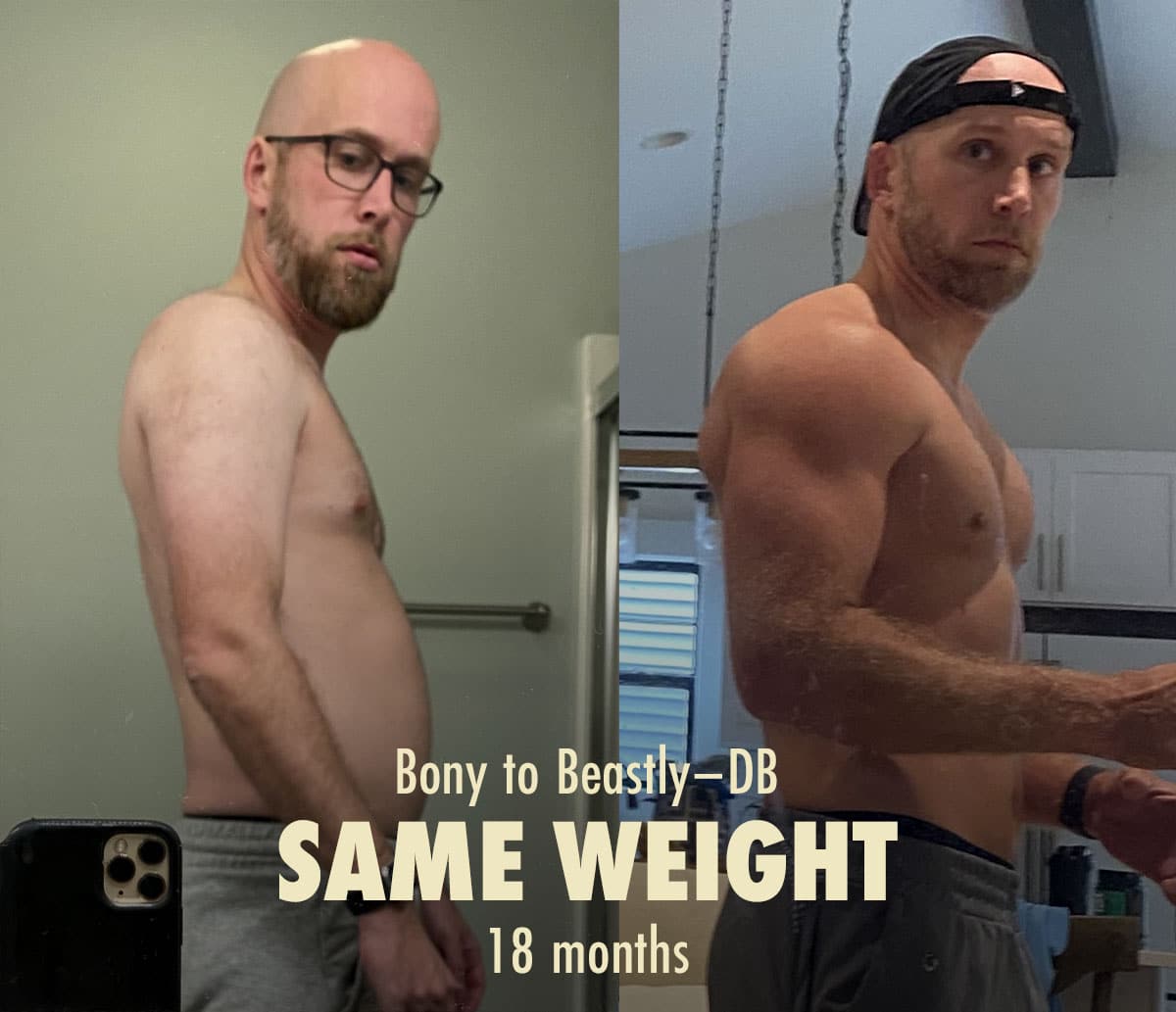
That’s when Marco started training me. We would start our workouts with 2–3 compound exercises, getting 3–4 minutes of rest between sets. And then we’d switch over to smaller isolation exercises, getting 1–2 minutes of rest between sets. That’s how I gained just over 70 pounds:

This was what almost all of the best strength coaches were recommending. A few big compound exercises with plenty of rest, focusing on progressive overload. And then pack in some quick isolation work to stimulate some extra muscle growth, keeping the rest times quite short.
That brings us to the late 2010s, when science-based lifting really started taking off, spearheaded by guys like Dr. Brad Schoenfeld. These researchers looked at how the best bodybuilders, powerlifters, and athletes were training, and they started testing it, trying to figure out which methods worked best.
Long Rest Times Stimulate More Growth Per Set
In a famous 2016 study, Schoenfeld split experienced lifters into two groups. The first group rested for 1 minute between sets, and the second group rested for 3 minutes. Both groups did full-body workouts with 3 sets per exercise.
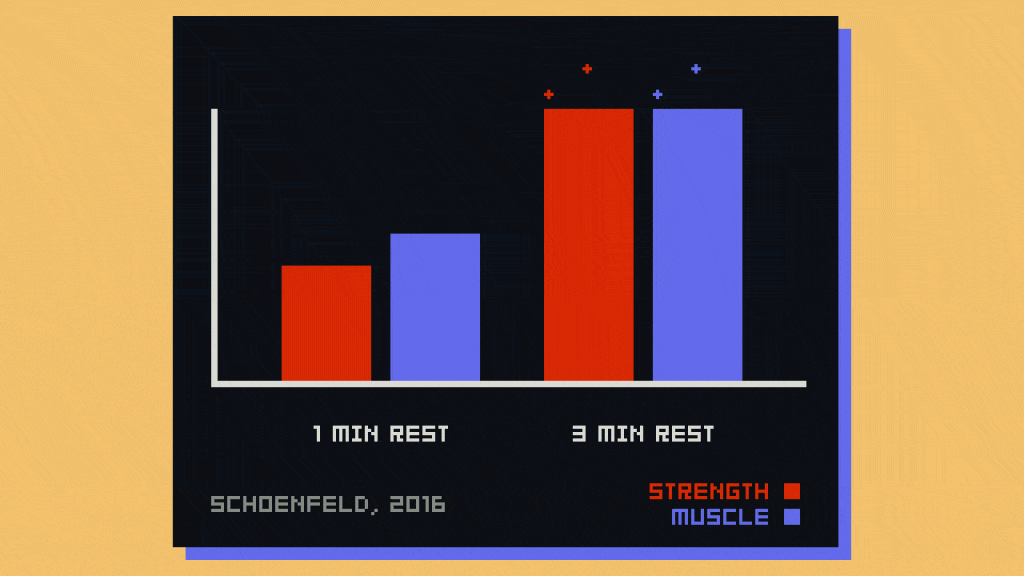
Both groups gained muscle, but the group that rested for longer recovered more strength between sets, got a couple more reps in their second and third sets, and gained twice as much muscle.
If we factor in warm-ups and moving from exercise to exercise, spending around 50% longer in the gym was giving these guys 100% more muscle growth. And the extra time was spent resting, making the workouts feel a bit more relaxed. Not a bad trade!
Science-based lifters started recommending longer rest times.
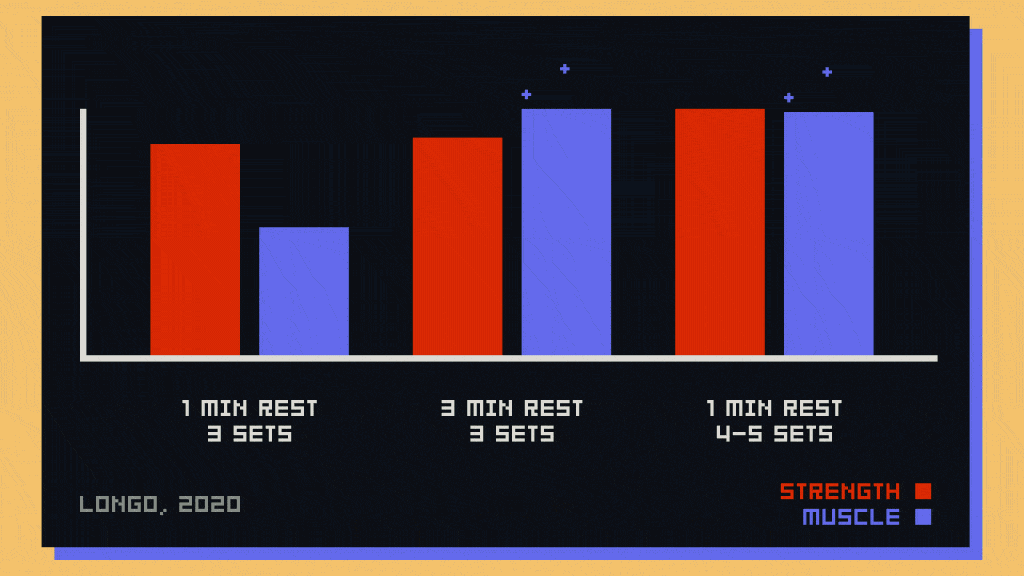
A few years later, Longo published a follow-up study. Just like in the first study, one group of participants rested for 1 minute and another rested for 3 minutes. And just like in the first the study, longer rest periods yielded twice the gains. However, Longo added a third group:
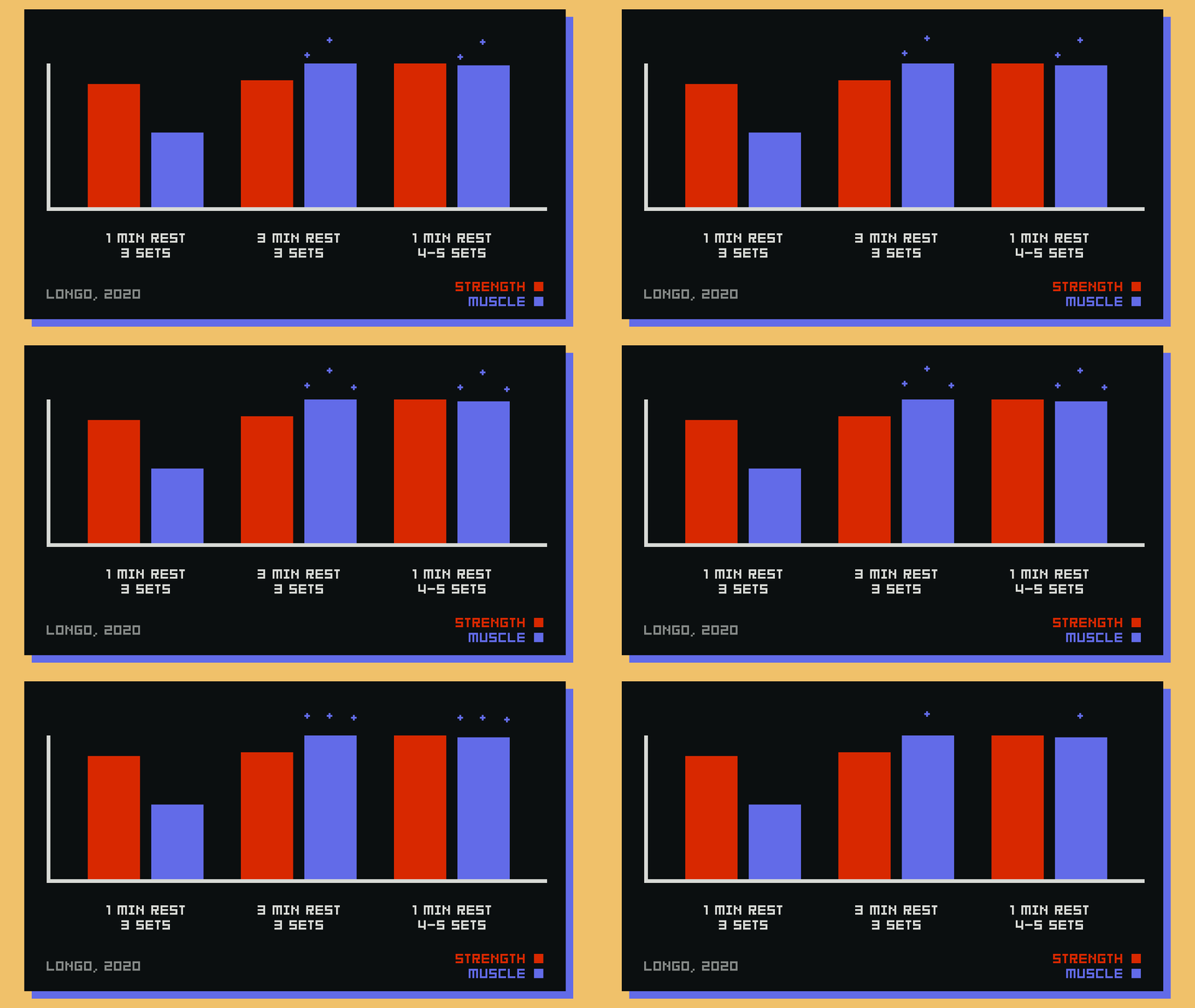
The third group used short rest times, but they kept doing sets until they’d completed as many reps as the group that rested for longer. Like this:
- 3 sets, 3 min rest: 9, 8, 7 (24 total reps)
- 3 sets, 1 min rest: 9, 7, 5 (21 total reps)
- 4 sets, 1 min rest: 9, 7, 5, 3 (24 total reps)
This third group gained just as much muscle as the first group, but they finished each exercise in ≈7 minutes instead of ≈9 minutes. Now we’re seeing a way to get more growth in less time.
This wasn’t a great surprise. Bodybuilders had been training this way for decades. Rather, researchers were slowly, systematically investigating the methods the best bodybuilders were already using, trying to figure out which methods were driving their results. Many of these researchers were competitive powerlifters, bodybuilders, or both.
The tradition and the science feed into each other.
Intensity Techniques
What if we do even more sets with even shorter rest times, condensing the workouts even further? In a 2026 study, Attarieh tested this idea, having participants do leg extensions with either 20 seconds or 2 minutes of rest, with both groups doing the same total number of reps:
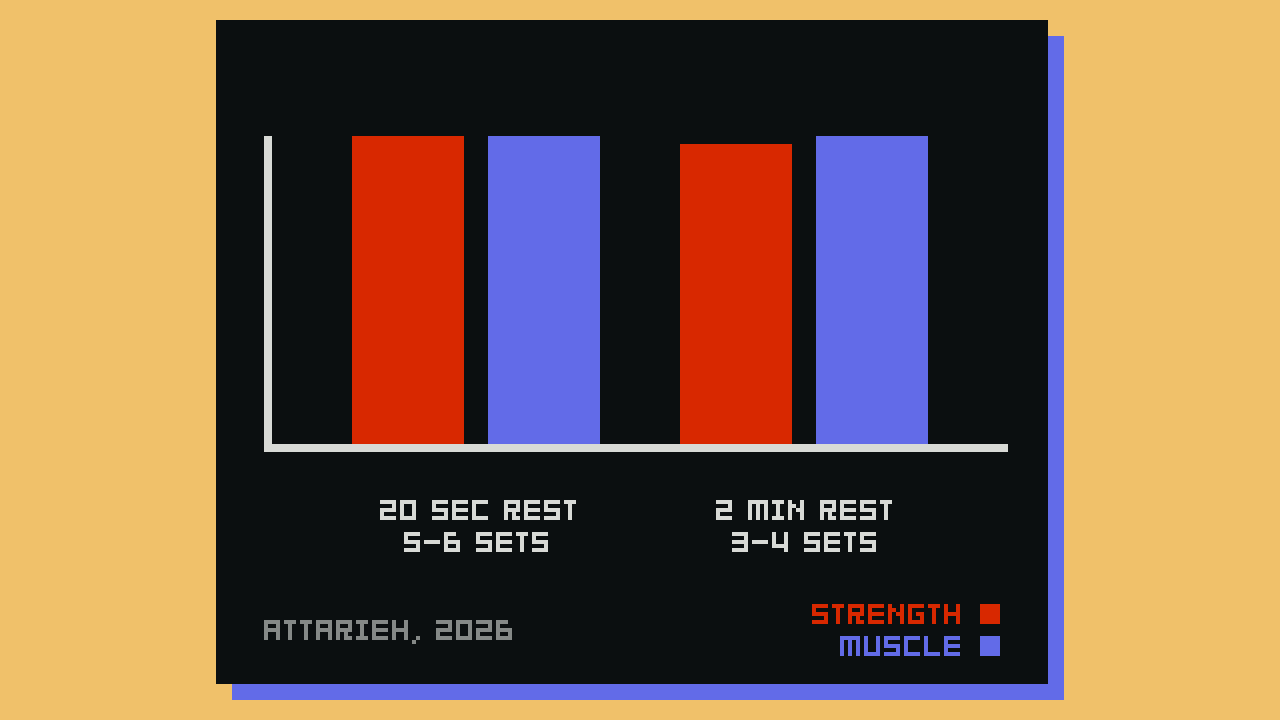
The group using shorter rest periods had to do more sets, but they gained the same amount of muscle, and they were out of the gym in half the time. This is a style of training called “rest-pause,” where you do a set, take a few breaths, try for a few more reps, take a few breaths, and so on. You might also hear them called “myo reps.”
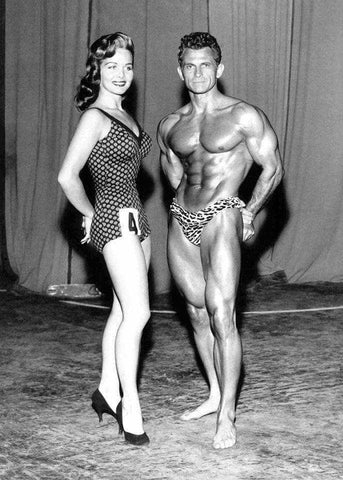
This style of training goes back to the 1930s, but it really became popular in the 50s and 60s, popularized by legendary natural bodybuilders like Vince Gironda. For example, you might do a set of biceps curls, take a few breaths—without putting the weight down—and then try to get a few more, and then a few more after that. It’s difficult, but it lets you stimulate a ton of muscle growth very quickly.
Drop sets are another way to get this same effect. The difference is that with a drop set, you reduce the weight by ≈50%, allowing you to continue getting a moderate number of reps:
- 40 pounds × 10 reps
- Quickly change the weight
- 20 pounds × 10 reps
- Quickly change the weight
- 10 pounds × 10 reps
1–2 drop sets is usually plenty, but if you want to keep going, you can keep reducing the weight. For example, with lateral raises, you could “run the rack”, starting with 30 pounds, then 15, 8, 4, and 2, and then finish by flapping your empty hands.
These techniques are tried and true, with plenty of modern research to support them… but I have two warnings:
- The Attarieh study used leg extensions, a smaller isolation exercise. Bigger compound exercises work your heart much harder, making short rest periods much more unpleasant, and also making it more likely your cardiovascular system becomes the limiting factor. Great for your heart, less great for building muscle.
- This can be a brutal way to train! Some challenge here and there is fun, but a relentless onslaught of burning muscle pain and cardiovascular stress can turn a fun challenge into a dreadful nightmare. The more unpleasant your workouts are, the more willpower it takes to muster up the courage to face them. Most people (including me) would rather do slightly longer, more enjoyable workouts.
I’d rather spend 40 minutes doing a workout I enjoy than 30 minutes doing a workout I hate. I’d rather leave the gym feeling pumped than stressed. I want to look forward to my next workout.
I was going through this research when making our new program, Commando: High-Efficiency Training. I wanted to make the workouts as effective, efficient, and enjoyable as possible.
Timed Rest Periods
There’s one more consideration. A new study by Mohan and colleagues split experienced lifters into two groups (study). The first group used strict 2–3 minute rest periods, depending on the exercises. The other group rested until they felt recovered, which usually wound up being ≈4 minutes.
The group training with strict rest times gained slightly, insignificantly more muscle, and their workouts were 22 minutes shorter. Intriguingly, though, both groups said the workouts felt equally challenging. Now we’re seeing a true advantage.
By default, I recommend resting for 2–3 minutes on bigger compound exercises and 1–2 minutes on smaller isolation exercises. That’s enough time to regain virtually all of your strength, saving you from needing to do extra sets (study). You get maximum per set efficiency, and the workouts are just as enjoyable.
This fits in with the overall body of research, with the latest meta finding that resting for at least a minute boosted muscle growth per set, but that resting for more than 2–3 minutes didn’t (meta).
And then if you want to quickly and efficiently add more stimulus, you can add an occasional rest-pause or drop set—sparingly.

That’s how we’ve programmed Commando. The workouts are 40 minutes long, and they stimulate a ton of muscle growth very efficiently, with minimal fatigue, and while still being enjoyable. The other two programs in the bundle line up perfectly with this research, too, but the workouts are 75–90 minutes long.
==> Commando Program
If you want to try the Commando program, we have a special deal right now. It’s bundled with the Barbarian and Bonemaker programs, as well as our bulking, cutting, and recomp guides.
It includes with personal support and feedback from us. We’ll personally make sure you get great results.
And my goal is to gradually teach you the ins and outs of lifting, nutrition, health, and aesthetic mastery, with a small new guide (similar to this article) every Sunday.
I hope to see you on the other side!

Shane Duquette is the founder of Outlift, Bony to Beastly, and Bony to Bombshell, each with millions of readers. He's a Certified Conditioning Coach (CCC), has gained 70 pounds, and has over a decade of experience helping more than 15,000 people build muscle. He also has a degree in fine arts, but those are inversely correlated with muscle growth.
Muscle-Building Mini-Course via Email
Sign up for our 5-part muscle-building mini-course that covers everything you need to know about:
Here are some related articles